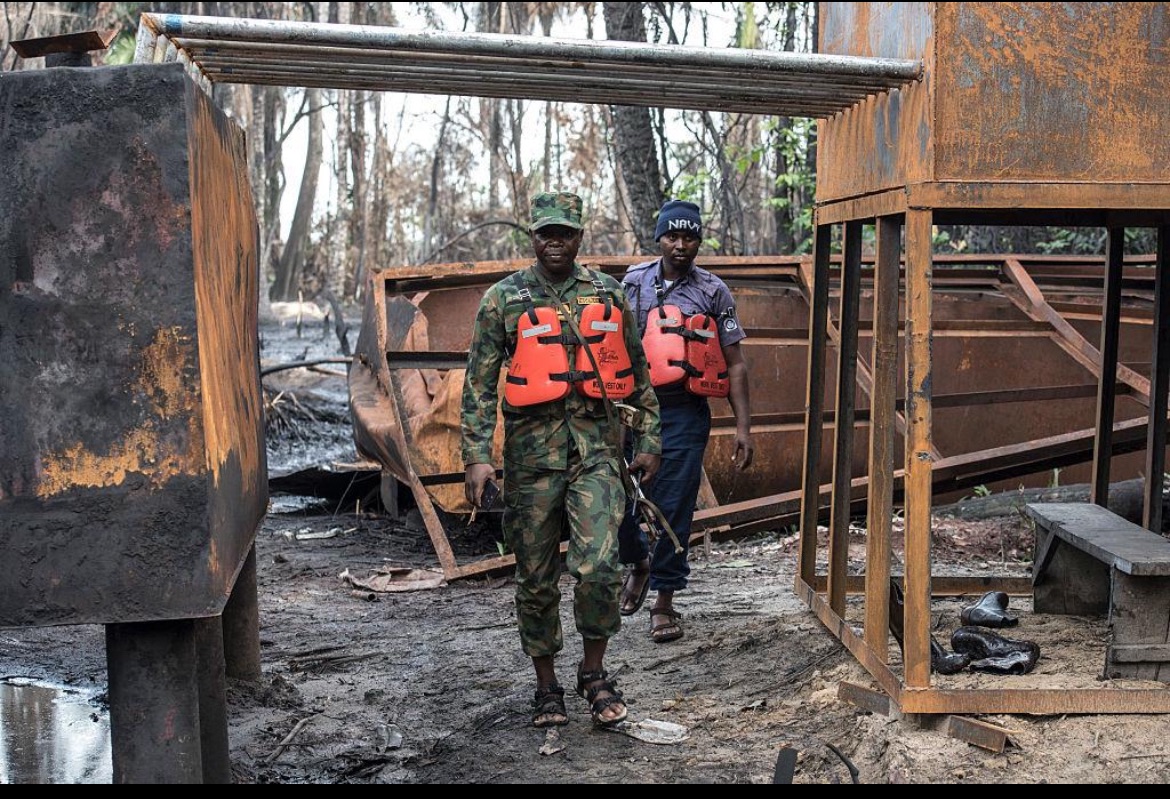

The Nigerian Navy has shut down two illegal refining sites in Rivers State and recovered about 34,000 litres of suspected illegally refined diesel as part of its ongoing crackdown on crude oil theft and illegal petroleum activities in the Niger Delta.
The operation was carried out on Friday around the Ohaji axis of Egbema-Ndoni Local Government Area of Rivers State by personnel of the Nigerian Navy Ship (NNS) PATHFINDER.
The Director of Naval Information, Capt. Abiodun Folorunsho, disclosed the development in an operational report cited by the News Agency of Nigeria (NAN) on Sunday.
According to him, the operation was designed not only to dismantle existing illegal refining facilities but also to prevent operators from rebuilding them after security forces had previously cleared the area.
During the operation, naval personnel identified two illegal refining locations and immediately deactivated them.
The team also recovered approximately 34,000 litres of suspected illegally refined Automotive Gas Oil (AGO), commonly called diesel.
The petroleum products were found stored in different locations, including dugout pits, sacks and reservoirs.
Other materials believed to have been used in the illegal refining process were also recovered from the sites.
Folorunsho explained that the operation formed part of the Navy’s continued efforts to disrupt illegal refining activities and stop the return of illegal refining infrastructure in the area.
He said repeated naval operations in the region had contributed to a reduction in the reactivation of illegal refining sites.
No arrests were recorded during the latest operation because the suspected operators reportedly fled the area before the naval team arrived.
The Navy said the affected sites, recovered petroleum products and other materials were dealt with according to established procedures for combating crude oil theft and illegal refining.
The latest intervention was conducted under Operation DELTA SENTINEL, an intelligence-driven security operation focused on disrupting crude oil theft, illegal refining and other activities affecting Nigeria’s petroleum industry.
The Navy has maintained that such operations are necessary to protect the country’s oil-producing communities and reduce losses associated with the illegal exploitation of crude oil.
The Rivers operation is part of a broader series of seizures and interventions carried out by the Nigerian Navy across the Niger Delta.
In June, naval personnel recovered about 63,290 litres of suspected illegally refined AGO and intercepted a vehicle allegedly connected to an illegal petroleum distribution network in Rivers State.
In another operation around the same period, the Navy intercepted about 103,500 litres of suspected illegally refined diesel concealed in 375 sacks aboard a wooden boat at the APS Limited Jetty in Woji, Rivers State.
Between January and March 2026, Operation DELTA SENTINEL reportedly led to the dismantling of 22 illegal refining sites and the recovery of more than 457,000 litres of stolen crude oil and refined petroleum products.
In February, naval personnel also intercepted the vessel MV Amukpoye, which was carrying about 180 tonnes of suspected illegally sourced diesel. Eight suspects were arrested in connection with the incident.
The Navy’s continued crackdown comes as Nigeria seeks to increase crude oil production by improving security around oil-producing areas.
The Nigeria Economic Summit Group’s 2026 Half-Year Outlook Report projected that Nigeria’s crude oil production could rise above 1.7 million barrels per day in the second half of 2026.
The expected improvement is linked to reduced crude oil theft, better pipeline security and increased investment in upstream oil production.
Data from OPEC showed that Nigeria produced about 1.505 million barrels of crude oil per day in July, compared with 1.555 million barrels per day in June. However, production remained above 1.5 million barrels per day for the third consecutive month.
Average production also increased from 1.388 million barrels per day in the first quarter of 2026 to 1.525 million barrels per day in the second quarter.
The Federal Government and security agencies are hoping that continued action against oil theft and illegal refining will help protect legitimate petroleum operations, reduce revenue losses and strengthen Nigeria’s position as a major crude oil producer.
Nigeria’s upstream regulator, the Nigerian Upstream Petroleum Regulatory Commission (NUPRC), has also projected higher production in the coming years, with the country targeting three million barrels of crude oil per day by 2030.
The latest Navy operation therefore forms part of a wider effort to secure oil-producing communities, protect petroleum infrastructure and ensure that more of Nigeria’s crude oil output reaches legitimate markets.