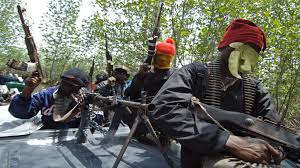

At least 17 people have been killed in a new round of violence across Kaduna and Plateau States, underscoring the persistent insecurity troubling Nigeria’s north-central region. The attacks, which occurred between Friday and Saturday, targeted rural communities that have become recurring flashpoints in the country’s complex web of conflict driven by ethnic tensions, land disputes, and criminality.
In Kaduna State, seven people lost their lives and one was injured when armed men stormed the Damakasuwa community in Chawai Chiefdom, Kauru Local Government Area, around 8 p.m. last Friday. Residents reported that the attackers fired indiscriminately, forcing villagers to flee into nearby bushes. According to the Paramount Chief of Chawai, Yahaya Muhammad, five victims died instantly, while two others later succumbed to injuries. He said calm had since been restored after the deployment of soldiers and local vigilante groups.
Barely 24 hours later, similar violence erupted in Plateau State, where 10 people were killed in separate assaults, seven in Kwi, Riyom Local Government Area, and three in Pushit, Mangu Local Government Area. Both communities have seen repeated attacks in recent years, often tied to long-standing disputes between farming and herding communities. Local youth groups and traditional leaders have called for increased patrols and better intelligence sharing between communities and security forces.
While such incidents are tragically familiar, they reflect deeper structural and historical realities in Nigeria’s north-central belt, a region where ethno-religious tensions, environmental pressures, and economic fragility intersect.
A Historical Fault Line
The Middle Belt, which includes both Kaduna and Plateau, has long been a zone of cultural and ethnic diversity. This diversity, however, has often turned volatile. Historical migration patterns, colonial-era land policies, and the contestation over “indigene” versus “settler” status have created deep social fissures that continue to drive violence. In Plateau State, particularly in areas like Riyom and Barkin Ladi, recurring clashes between farming communities and pastoralists have persisted for more than two decades. Kaduna, too, has suffered cycles of communal conflict dating back to the early 2000s, when disputes over land, religion, and political representation often turned deadly.
The Economic and Environmental Dimensions
Beyond its human toll, the violence has had far-reaching economic consequences. Both Kaduna and Plateau are predominantly agrarian states, major producers of maize, yams, tomatoes, and potatoes. Each attack, therefore, disrupts food production and trade. Farmers abandon their fields, livestock is stolen or killed, and rural markets shut down. These disruptions have contributed to rising food prices and worsening food insecurity in the region.
Environmental degradation has also played a subtle but significant role. As desertification and erratic rainfall continue to push herders southward in search of pasture, competition over arable land has intensified. In communities where population density is already high and economic opportunities are limited, disputes over farmland often become flashpoints for violence. The absence of clearly demarcated grazing routes and the breakdown of traditional conflict resolution mechanisms have only worsened matters.
Weak Security and Widespread Impunity
A recurring theme in both Kaduna and Plateau is the failure of the state to protect vulnerable communities. Despite the presence of military formations in both states, rural areas remain largely unguarded. Response times to attacks are often slow, and perpetrators are rarely brought to justice. This culture of impunity has emboldened criminal groups, some of whom now operate with relative ease, raiding villages, kidnapping for ransom, and extorting farmers.
Security analysts have also noted that many of these attacks are no longer strictly communal. What began as farmer-herder conflicts has, in many cases, evolved into complex criminal enterprises. Armed bandits, sometimes operating under the guise of ethnic militias, exploit weak governance structures to establish control over remote areas. In Kaduna’s southern belt, for instance, local residents have reported the presence of well-armed gangs who extort protection fees from farmers before they can access their own land.
The Broader National Impact
The consequences of such insecurity extend beyond the affected states. Nigeria is already grappling with soaring inflation, sluggish growth in the agricultural sector, and a cost-of-living crisis. Persistent violence in food-producing regions like Kaduna and Plateau compounds these challenges by reducing supply, disrupting trade networks, and discouraging investment.
Moreover, the displacement caused by these attacks is reshaping the social and demographic landscape of the north-central region. Thousands have fled rural communities, seeking refuge in urban centres where resources are already stretched thin. Humanitarian agencies have repeatedly warned that unless the insecurity is addressed, Nigeria’s fragile food system could face further strain.
Calls for Action
Following the recent killings, civic groups such as the Southern Kaduna Peoples Union and community associations in Plateau have urged the federal and state governments to adopt a more comprehensive strategy. They advocate for not just military intervention, but also investment in rural infrastructure, job creation, and justice reforms. Many experts argue that any sustainable solution must address the root causes: land use disputes, climate stress, and youth unemployment, rather than relying solely on force.
The killings in Damakasuwa, Kwi, and Pushit are thus not isolated tragedies. They are symptoms of a deeper malaise, one where weak governance, economic deprivation, and historical grievances converge. Unless there is a concerted effort to break this cycle through justice, development, and dialogue, the headlines will continue to tell the same story: of lives cut short, communities emptied, and a region struggling to find peace.