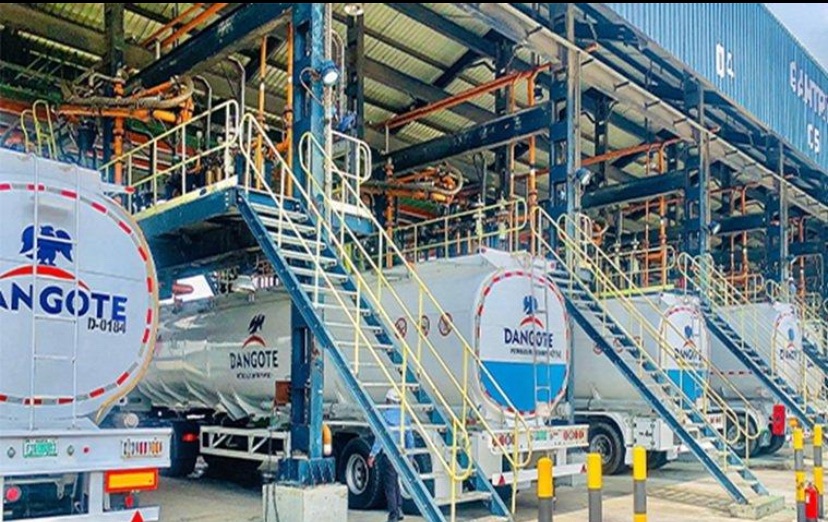

The Dangote Petroleum Refinery has warned that it may increase the export of petrol if large volumes of imported fuel continue entering the Nigerian market.
The refinery said the growing level of petrol imports is making it difficult to predict domestic demand and determine how much fuel should be kept in storage for Nigerian consumers.
According to the company, imported Premium Motor Spirit (PMS), commonly known as petrol, represented about 43 per cent of fuel supplied to Nigeria in July 2026.
The refinery said this was happening despite its ability to produce enough petrol to meet, and potentially exceed, the country’s domestic requirements.
Since beginning operations, Dangote Refinery said it has deliberately maintained substantial petrol reserves to prevent supply disruptions. This has required significant spending on storage facilities, transportation and working capital.
However, the company said the continued issuance of licences for petrol imports has created uncertainty about how much imported fuel will enter the country in the coming months.
This uncertainty, it explained, makes it difficult to accurately plan production and manage its inventory.
The refinery said keeping large quantities of petrol in storage for an indefinite period is becoming increasingly expensive when there is no clear picture of future import volumes.
As a result, the company said it has had to consider exporting some of its excess petrol to other regional and international markets.
Dangote Refinery stressed that such exports should not be interpreted as evidence that it is unable to supply Nigeria with enough fuel.
Instead, the company said the exports are a way of dealing with surplus stocks created by uncertainty in the domestic market.
The refinery explained that holding excess petrol comes with storage and financing costs. Exporting the surplus allows the company to move products out of its facilities instead of keeping large volumes that may not be immediately purchased locally.
The company also maintained that it remains committed to supplying the Nigerian market and has the capacity to continue meeting domestic fuel requirements.
It warned, however, that if excessive imports eventually contribute to a shortage or disruption in the market, such a situation should not automatically be blamed on the Dangote Refinery.
The refinery argued that local producers need better visibility of expected import volumes to enable them to plan production according to actual market demand.
It called for greater transparency and improved coordination among industry regulators, importers, marketers and domestic refiners.
According to the company, a more coordinated approach would support Nigeria’s local refining industry, strengthen energy security and reduce the country’s dependence on imported petroleum products.
It could also help conserve foreign exchange by encouraging greater use of locally refined fuel.
The development highlights the changing dynamics of Nigeria’s petrol market as the country adjusts to increased domestic refining capacity while imported products continue to compete for market share.
For consumers, the outcome could depend on how effectively regulators and industry players balance local production, imports, storage and demand.
Dangote Refinery said its priority remains maintaining reliable fuel supply, but added that market policies must provide enough certainty for local refiners to operate efficiently and sustainably.