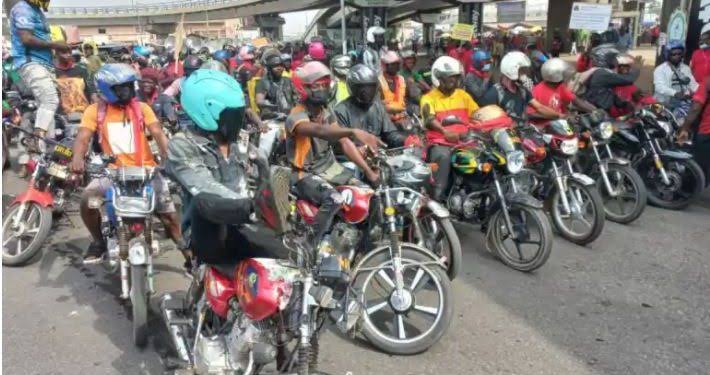

For many Nigerians, the okada rider is a familiar figure on the streets, moving passengers through traffic while turning long hours on the road into daily income.But how much does an okada rider actually make in a day
Abu, a motorcycle rider interviewed for this story, said he makes about ₦8,000 on a typical day.
His figure offers a glimpse into the economics of the business, but it should not be treated as the average income of all okada riders. Earnings vary depending on location, passenger demand, working hours, fuel costs and whether the rider owns or hires the motorcycle.
Recent estimates put gross daily revenue for commercial motorcycle riders in some Lagos suburban areas at about ₦10,000 to ₦15,000. A May 2026 report on Lagos delivery riders also found riders reporting daily earnings within that range, while some highly active riders said they could make as much as ₦30,000 on strong days. “Nairametrics report on Lagos delivery riders”. But gross earnings are not the same as take-home income.
Fuel is one of the biggest daily expenses. Riders also have to account for maintenance, levies and other operating costs. Those using hired motorcycles may have to make an additional payment to the bike owner.For example, a rider who collects ₦12,000 in fares could spend ₦2,500 on fuel, ₦600 on levies and ₦500 on maintenance, leaving ₦8,400 before any payment to a motorcycle owner.If another ₦2,500 goes to the owner, the rider is left with about ₦5,900.
The figures are illustrative, not an industry-wide average. Actual costs differ by location and individual arrangements.
Riders who own their motorcycles have a different cost structure because they do not make daily payments to owners, although they bear the cost of buying and maintaining the bike.The variation is visible outside Lagos too. Okada riders interviewed in Plateau State in June 2026 reported daily earnings of between ₦5,000 and ₦9,000, with one rider reporting about ₦9,000 a day. “Punch report on Plateau okada riders” If Abu’s ₦8,000 daily figure were sustained for 26 working days, it would amount to ₦208,000 a month.
But informal work rarely guarantees such consistency. Rain, weak passenger demand, mechanical faults, accidents and rising operating costs can quickly reduce earnings.
The okada business is therefore less about a fixed daily salary and more about daily cash flow.A rider may collect thousands of naira before sunset, but the real measure of his income is what remains after fuel, maintenance and other costs have taken their share.
For the okada rider, the money collected is only half the story. The money left in his pocket is the real income.