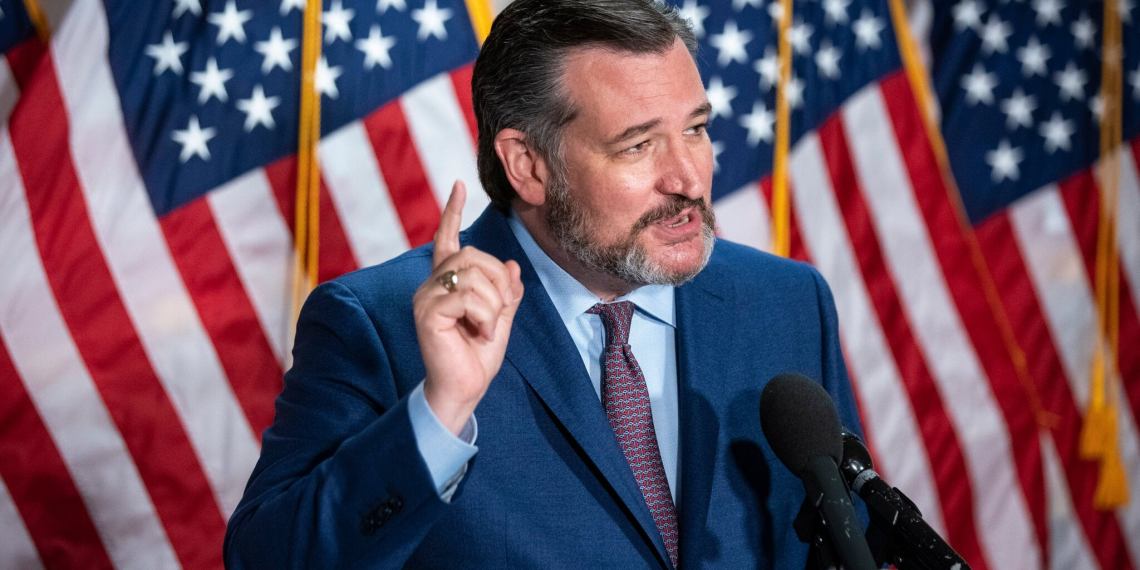

A prominent US politician has introduced draft legislation aimed at punishing Nigerian government officials who uphold or facilitate the country’s controversial Sharia and blasphemy laws. Texas Senator Ted Cruz, a Republican, is pushing a bill that would impose direct financial sanctions on these officials, following the recent move by President Donald Trump to place Nigeria back on the US list of nations with the worst record on religious freedom.
Nigeria was recently redesignated as a “Country of Particular Concern” (CPC), a label given by the US to governments that commit or tolerate systematic, egregious violations of religious freedom. Senator Cruz stated his bill is intended to formalise this designation and enforce accountability against Nigerian leaders, whom he accuses of ignoring or even facilitating the “mass murder” and persecution of Christians by militant groups.
The action is directly tied to the use of blasphemy laws in 12 northern Nigerian states, where Sharia law is implemented alongside civil law. These laws have been severely criticised by international rights groups, citing cases of individuals sentenced to death by religious courts or killed by mobs over mere allegations of insulting Islam.
From an economic perspective, this US political pressure presents a serious challenge to Abuja. The CPC designation opens the door for penalties, the most significant of which is the potential curtailment of non-humanitarian US foreign assistance. The United States is a major source of financial aid, and restricting these funds could severely impact various Nigerian development and public health programmes. Furthermore, imposing targeted sanctions such as freezing assets and barring travel for specific officials—threatens to damage Nigeria’s international reputation. Such diplomatic fallout can discourage crucial foreign investment and trade, placing greater strain on the country’s already struggling economy.
In response, the Nigerian government has rejected the allegations, arguing that the US assessment is misinformed. Officials maintain that the security crisis is not a simple religious persecution issue but a complex mix of insurgency, banditry, and communal conflict that affects citizens of all faiths. They insist the claims are distorted by pressure groups with a narrow agenda, but must now contend with a powerful US legislative effort that carries tangible economic consequences.