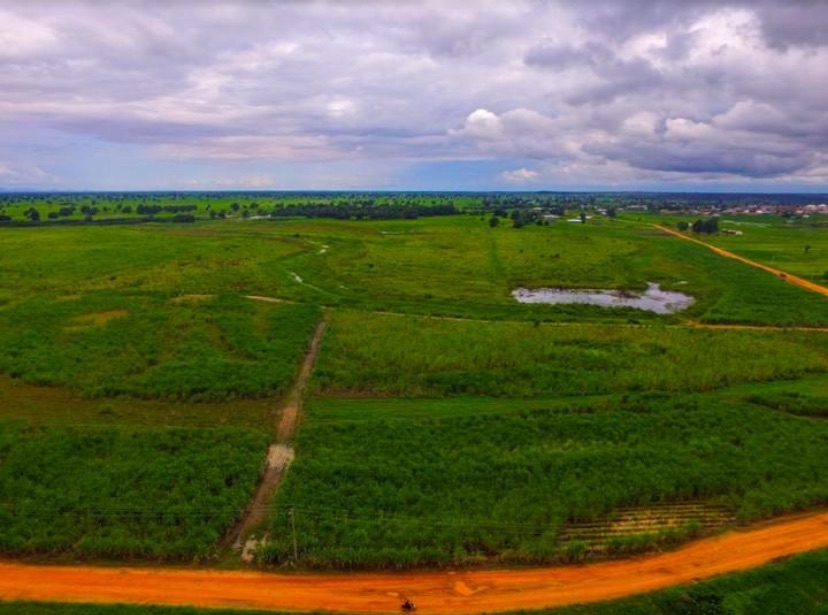

Nigeria is stepping up efforts to reduce its dependence on imported sugar as the National Sugar Development Council (NSDC) moves to mobilise an investment pipeline worth about $1 billion for the sector.
The initiative is designed to increase local sugar production, create jobs, support farmers and reduce the amount of foreign exchange spent on sugar imports.
The NSDC said the investment drive is being supported by a $1 billion engineering, procurement, construction and finance partnership with China’s SINOMACH, alongside a N10 billion Sugar Project Acceleration Fund established with the Bank of Industry.
The Executive Secretary and Chief Executive Officer of the council, Kamar Bakrin, disclosed the development when he received members of the Abuja chapter of the Chartered Institute of Directors during a visit to the council’s headquarters in Abuja.
According to the NSDC, Nigeria currently consumes about 1.8 million metric tonnes of sugar every year. A large portion of this demand is met through imports, resulting in an estimated $1 billion leaving the country annually.
Bakrin said the situation presents an opportunity for Nigeria to keep more money within the economy by developing local sugar production.
He explained that the country already had policies for developing the industry, but the major problem had been effective implementation.
The council is now using the Nigeria Sugar Master Plan 2.0 as an acceleration strategy aimed at shortening the time needed to achieve self-sufficiency and eventually produce about two million metric tonnes of sugar domestically.
Beyond sugar, the council said sugarcane could support several other industries. The crop can be processed into ethanol, animal feed and electricity, creating a wider industrial ecosystem around sugar production.
To improve accountability, the NSDC is also strengthening its Backward Integration Programme. Companies seeking sugar import quotas will be expected to demonstrate genuine investment in local production.
The council plans to use satellite imagery and physical inspections to independently verify activities at sugar production sites and ensure that companies meet their commitments.
Bakrin said the major financing challenge in the sector was not necessarily a shortage of money, but the lack of well-prepared projects capable of attracting funding.
The N10 billion Sugar Project Acceleration Fund will therefore support feasibility studies and other preparatory work needed to turn potential sugar projects into investment-ready opportunities.
These projects are expected to connect with the $1 billion SINOMACH partnership, creating a pathway for construction and financing.
The NSDC is also working with the African Export-Import Bank and the Nigeria Governors’ Forum to accelerate the development of sugar estates across different states.
Smallholder farmers are also expected to play a major role. Under the Sugarcane Outgrower Development Programme, farmers will participate more directly in the growth of the industry.
The council said sugar estates will be expected to provide land for outgrowers and contribute to infrastructure, employment and other development projects in host communities.
Bakrin also called for stronger corporate governance in sugar estates, processing companies and farmer organisations.
The Chartered Institute of Directors, led by Fatima Mede, commended the council’s reforms and expressed willingness to support efforts aimed at developing Nigeria’s sugar industry.
If successfully implemented, the investment programme could strengthen Nigeria’s agricultural sector, create new industrial opportunities and reduce the country’s dependence on imported sugar.