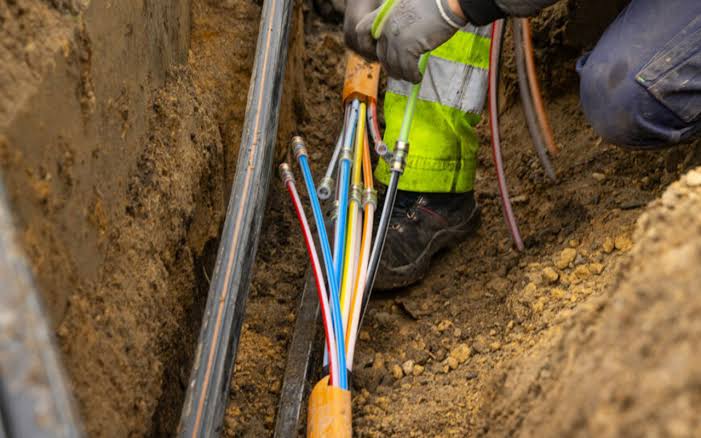

Nigeria recorded more than 5,000 fibre-optic cable cuts in the first six months of 2026, with road construction, excavation and related civil works identified as major causes, the Nigerian Communications Commission (NCC) has disclosed.
The regulator said the repeated damage highlights the need for stronger coordination between telecommunications operators, road contractors, engineers and government agencies as Nigeria expands both physical and digital infrastructure.
NCC Executive Vice Chairman and Chief Executive Officer, Dr Aminu Maida, disclosed the figure on Tuesday, August 11, 2026, at a stakeholders’ workshop on the protection of fibre-optic cables during road construction and other civil works in Abuja.
The workshop was held at the National Counter-Terrorism Centre under the Office of the National Security Adviser and was attended by stakeholders including the Permanent Secretary of the Federal Ministry of Works, Rafiu Adeladan, and representatives of the ONSA’s Directorate of Critical National Assets and Infrastructure Protection.
Maida described telecommunications infrastructure as a critical national lifeline supporting banking, government services, education, healthcare, commerce, security and emergency communications.
He warned that damage to fibre infrastructure can result in failed calls, disrupted digital services and stalled payments, imposing costs on businesses, government institutions and consumers.
The NCC chief also cited the February 2024 telecommunications disruption, when fibre cuts, including those linked to road construction, contributed to an almost network-wide outage for one operator. The incident affected millions of users for several hours and placed additional traffic pressure on other networks.
Maida said the problem requires coordination rather than assigning blame solely to construction companies or telecommunications operators. He urged stakeholders to put preventive measures in place before excavation and other civil works begin.
As part of the response, the Permanent Secretaries of the Federal Ministry of Works and the Federal Ministry of Communications, Innovation and Digital Economy have inaugurated a Standing Committee on the Protection of Fibre Optic Cables.
According to the NCC, the committee is expected to develop practical coordination mechanisms covering activities before, during and after road construction and other civil works.
The latest disclosure comes as Nigeria seeks to deepen broadband access and expand its digital economy. The frequency of fibre damage underscores the importance of protecting existing telecommunications infrastructure alongside new investments in connectivity.
For businesses increasingly dependent on digital payments, cloud services, communications and online transactions, preventing avoidable fibre cuts is becoming an important part of maintaining reliable economic infrastructure.