
The Nigerian National Petroleum Company Limited (NNPC Ltd) is preparing to implement a new framework for deep offshore production-sharing contracts (PSCs) after President Bola Tinubu approved incentives designed to attract up to $50 billion in new oil and gas investment.
The Presidency said the Deep Offshore Oil and Gas Projects Incentives (Tax Remission) Order, 2026 replaces project-by-project negotiations with a transparent, rules-based framework intended to provide investors with greater certainty and improve Nigeria’s competitiveness for international capital.
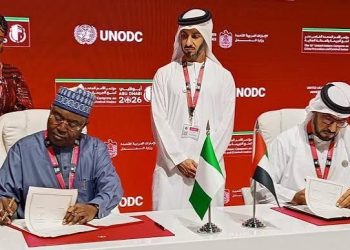
NNPC Group Chief Executive Officer, Bashir Bayo Ojulari, said the company was ready to implement the framework and make the necessary amendments to eligible PSCs. He described investment certainty as a key factor in attracting capital to Nigeria’s deepwater sector.
The reform is expected to support major offshore developments that have faced delays amid high development costs and uncertainty over commercial terms. The government estimates that the new framework could unlock up to $50 billion in fresh investment across eligible deep offshore projects.
One of the most prominent projects expected to benefit is the Bonga South West project, which the Presidency values at approximately $10 billion. The development, led by Shell and its partners, is expected to be among the first major projects to benefit from the new investment framework.
For Nigeria, the stakes are significant. Deepwater projects require large upfront investments and long development periods, but successful projects can deliver additional crude production, government revenue, foreign-exchange inflows and demand for local engineering, fabrication, logistics and other oilfield services.
The reform also supports the government’s broader effort to reverse years of declining investment in Nigeria’s upstream petroleum industry and increase crude production. However, the $50 billion figure represents potential investment, rather than funds already committed.
The next test will be implementation. Investors will assess the detailed fiscal terms, contractual amendments, regulatory approvals and project economics before committing capital.
NNPC, as the government’s nominated counterparty under the relevant PSCs, is expected to coordinate the contractual changes required to give effect to the new regime.
The government’s ability to translate the policy into final investment decisions, construction activity and new production will ultimately determine whether the reform delivers the capital and output gains it promises.