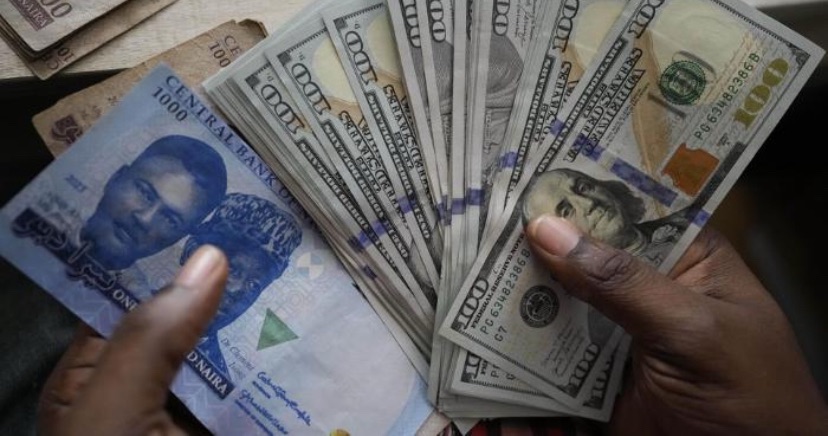

The naira recorded a slight decline against the United States dollar on Tuesday as activity in Nigeria’s official foreign exchange market dropped significantly.
Data from the Central Bank of Nigeria showed that the dollar was quoted at N1,364.89 at the Nigerian Foreign Exchange Market (NFEM), compared with N1,360.14 recorded on Monday.
The movement represents a depreciation of N4.75, or about 0.35 per cent, in the value of the naira.
Despite the decline in the official market, the currency remained stable in the parallel market, where the dollar continued to trade at around N1,425.
The weaker official exchange rate came alongside a sharp reduction in foreign exchange trading activity.
Interbank turnover dropped by 86.41 per cent, falling from $213.85 million on Monday to just $29.06 million on Tuesday. The number of transactions also declined considerably, dropping from 182 deals to 47, representing a 74.18 per cent decrease.
The slowdown followed a similar decline recorded in the previous trading session. NFEM turnover fell by 48.24 per cent on Monday to $646.51 million, compared with $1.25 billion recorded on Friday.
The reduced trading activity suggests that demand and supply in the foreign exchange market were relatively subdued during the period.
Despite the short-term pressure on the naira, Nigeria’s external position continues to show signs of improvement.
CBN data showed that the country’s external reserves climbed to $52.14 billion as of August 10, 2026. This represents a 29.41 per cent increase from the $40.29 billion recorded on August 8, 2025.
The stronger reserves provide Nigeria with a larger financial cushion to meet international obligations and help support stability in the foreign exchange market.
The increase also comes as the CBN steps up dollar sales to address seasonal demand. The central bank sold approximately $1.4 billion in foreign exchange in July, compared with $320 million in June.
The higher level of intervention reflects efforts by monetary authorities to ensure that businesses and other market participants can access foreign currency while reducing excessive pressure on the naira.
Analysts at Quest Merchant Bank said the country’s external position remains encouraging despite the latest movement in the exchange rate.
According to the analysts, Nigeria could continue to see stronger reserves if favourable oil prices, foreign capital inflows and the CBN’s monetary policy measures remain supportive.
For businesses, the exchange rate remains an important factor because movements in the naira directly affect the cost of imported goods, raw materials, machinery and other foreign-currency obligations.
A more stable foreign exchange market could therefore provide businesses with greater certainty when planning investments and managing costs.
For consumers, however, changes in the exchange rate can influence the prices of imported products and locally produced goods that depend on imported inputs.
The latest naira movement is relatively small, but it highlights the continued sensitivity of Nigeria’s currency market to dollar demand and trading conditions.
With external reserves now above $52 billion, policymakers have a stronger buffer to manage temporary pressures. However, maintaining confidence in the foreign exchange market will remain important as Nigeria seeks to achieve greater exchange-rate stability and strengthen economic growth.