


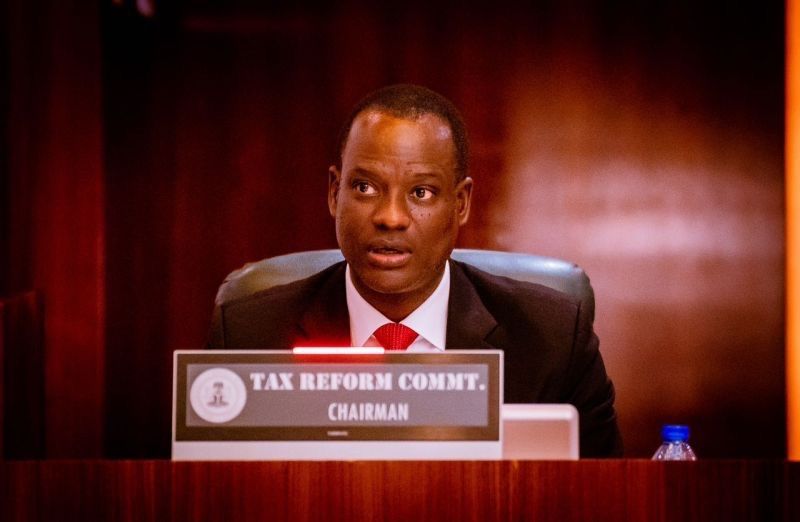

The Federal Government has suspended plans to introduce a 5 percent fuel surcharge until the economy shows signs of recovery, according to Taiwo Oyedele, chairman of the Presidential Committee on Fiscal Policy and Tax Reforms.
Oyedele said the levy, originally intended to fund road maintenance, would only worsen hardship if implemented now. He made the remarks on Thursday at the Haulage and Logistics Magazine Conference in Lagos, stressing that Nigerians cannot bear another cost burden at a time when fuel prices, inflation, and transport costs are already weighing heavily on households.
“The idea behind the fuel surcharge is brilliant,” Oyedele said. “It’s meant to ensure that part of fuel revenue is reinvested in fixing roads. But introducing it now, when people are already stretched, would be insensitive.”
Policy deferred until economic stability returns
The 5 percent fuel surcharge, which dates back to the Obasanjo administration, allocates 40 percent of revenue to federal roads and 60 percent to state and local government roads. Although the Federal Roads Maintenance Agency (FERMA) had sought approval to begin collection after the fuel subsidy removal, the tax reform committee resisted.
Oyedele explained that while the provision still exists in the draft tax law, it cannot take effect without approval from the Minister of Finance.
“For me, the right time will be when the naira strengthens or crude prices drop,” he said. “Only then can we introduce it without raising pump prices.”
Relief for transporters and small businesses
Oyedele also revealed that the ongoing tax reform process aims to ease the burden on the haulage and logistics industry, which has suffered from multiple taxation and high operating costs.
“We are not introducing new taxes; we are eliminating the overlapping ones that frustrate transporters and drive up prices,” he said. Under the new framework, small logistics firms earning below N100 million annually will be exempt from company income tax, while qualifying operators will benefit from VAT refunds and targeted incentives.
The reforms, he added, are designed to simplify Nigeria’s tax system, improve transparency, and ensure that revenue distribution across government levels supports infrastructure development and economic stability.
Impact on everyday Nigerians
For many Nigerians, the decision to delay the surcharge comes as a temporary relief. Any new tax on fuel would have triggered higher transport fares and food prices, deepening the cost-of-living crisis.
Commuters in major cities like Lagos and Abuja already pay more than double last year’s fares following subsidy removal and the weakening naira. Market traders and small business owners have also seen delivery costs climb sharply, eroding profits.
Economists say postponing the surcharge makes sense in the short term. “Adding a levy now would push inflation further and hurt low-income earners,” said an analyst with a Lagos-based consultancy. “But in the long run, government still needs a reliable source of funding for road maintenance.”
As Nigerians wait for better roads and a stronger economy, the government’s challenge remains balancing revenue generation with the everyday realities of a population struggling to cope with rising prices and stagnant incomes.





Your article helped me a lot, is there any more related content? Thanks!