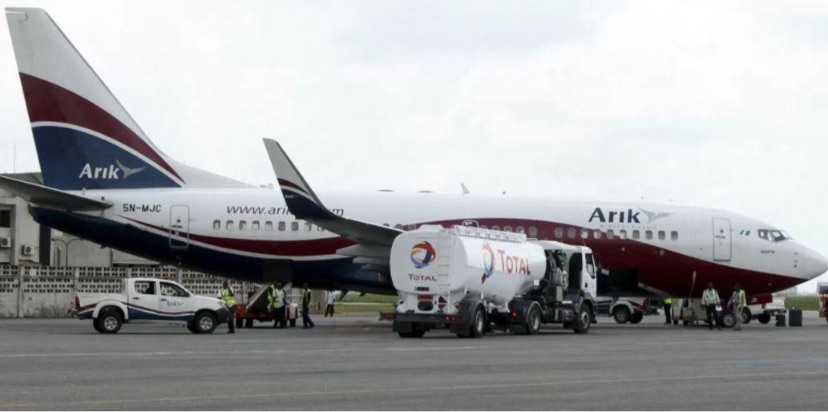

Nigerian airlines are facing growing financial pressure as they borrow heavily from local banks to keep their aircraft flying amid the high cost of aviation fuel.
The Airline Operators of Nigeria (AON) said airlines have accumulated more than N60bn in loans from local banks, with a significant portion of the money being used to purchase Jet A1, the fuel used by commercial aircraft.
A member of the AON Board of Trustees, Roland Iyayi, said the situation showed how severely rising fuel prices were affecting airline businesses. According to him, some airlines now depend on bank financing simply to maintain their daily operations.
The high cost of Jet A1 has become one of the biggest challenges facing Nigeria’s aviation industry. Fuel accounts for roughly half of the revenue of some airlines, leaving little money to cover salaries, aircraft maintenance, taxes and other operating expenses.
Iyayi said the industry had previously warned that airlines could suspend operations because of the sharp increase in fuel prices. The warning prompted Aviation and Aerospace Development Minister Festus Keyamo to engage airline operators and other stakeholders.
Meetings were held involving the AON, the Nigerian Midstream and Downstream Petroleum Regulatory Authority (NMDPRA) and fuel marketers. A committee was also established to recommend ways to reduce the cost of aviation fuel.
However, the AON said many of the recommendations presented to the government have yet to produce meaningful results.
The operators are particularly concerned about the difference between aviation fuel prices in Nigeria and other countries. They argue that the unusually high local price makes it difficult for domestic airlines to compete and remain profitable.
The pressure has also affected the ability of airlines to meet some of their financial obligations. Iyayi said some operators have struggled to remit the five per cent ticket sales charge payable to the Nigerian Civil Aviation Authority (NCAA) because much of their ticket revenue is being used to purchase fuel.
Airlines also face difficulties increasing ticket prices enough to recover their rising costs. As a result, some operators continue to maintain relatively affordable fares while operating at losses.
United Nigeria Airlines’ Public Relations Officer, Chibuike Uloka, described Jet A1 as one of the industry’s biggest expenses. He said fuel costs could account for about 50 per cent or more of an airline’s revenue.
Beyond fuel, airlines are also dealing with several taxes and other charges. These expenses further reduce the money available for aircraft maintenance, staff salaries and other essential operations.
The financial challenges have increased the industry’s dependence on loans and other forms of investment. Airline operators say the sector requires significant capital because aircraft operations are expensive and require continuous spending.
The government had earlier announced a 30 per cent relief on debts owed by airlines to aviation agencies and called for discussions between airlines, fuel marketers and regulators over a fair Jet A1 price.
However, operators maintain that the measures have not solved the underlying problem.
The situation became worse after global oil market disruptions linked to the Middle East conflict pushed aviation fuel prices sharply higher. In April, industry operators warned that domestic flights could become unsustainable after Jet A1 reportedly rose from about N900 per litre to N3,300 per litre.
With airlines now carrying heavy debts while facing high fuel prices, industry stakeholders are calling for stronger government action to prevent further financial distress.
They warn that if the situation continues, airlines could reduce flights, increase fares or struggle to remain operational, with possible consequences for passengers, businesses and the wider Nigerian economy.