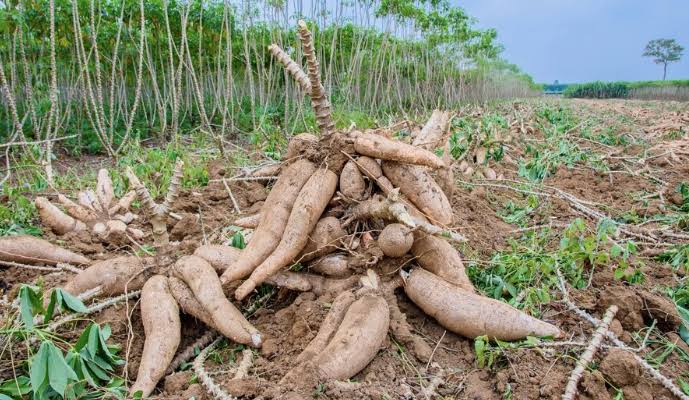

Nigeria remains the world’s largest cassava producer, harvesting more than 60 million metric tonnes annually, around one-fifth of global output, according to the Food and Agriculture Organization (FAO). Yet despite its production advantage, the country captures only a small share of the global cassava value chain, highlighting a significant opportunity to expand agro-industrial processing.
More than 80% of Nigeria’s cassava harvest is consumed locally as traditional foods such as garri, fufu and lafun, while only a small proportion is processed into industrial products, according to the Nigeria Cassava Investment Accelerator (NCIA), an initiative of Lagos Business School. The accelerator estimates that expanding domestic processing could unlock as much as $6 billion in value across food manufacturing, pharmaceuticals, biofuels and industrial applications.
Cassava derivatives, including industrial starch, glucose syrup, sorbitol, ethanol and high-quality cassava flour (HQCF), serve industries ranging from paper, textiles and adhesives to food processing and pharmaceuticals. Nigeria’s Federal Government has also identified cassava-based bioethanol as part of its strategy to reduce fuel imports and deepen renewable energy production. Industry analysts say wider adoption of HQCF in bread and confectionery could further reduce dependence on imported wheat if supportive policies and consistent supply are achieved.
Private investment is beginning to reshape the sector. Psaltry International operates Africa’s first commercial cassava-based sorbitol plant in Oyo State, sourcing roots from thousands of smallholder farmers. In Ekiti State, Agbeyewa Farms, working under the National Agricultural Land Development Authority (NALDA), has reported yields significantly above the national average while supplying industrial processors. Other companies, including Flour Mills of Nigeria and Niji Foods, have also expanded investments in cassava flour and starch processing.
Despite the opportunities, structural constraints continue to limit growth. Poor rural road infrastructure contributes to significant post-harvest losses, while unreliable electricity raises production costs as processors depend heavily on diesel-powered generators. Access to affordable long-term financing also remains a challenge, given cassava’s production cycle of up to 12 months.
The Federal Government has introduced mechanisation programmes under the Renewed Hope Agenda, including the deployment of tractors and other farm equipment, to improve productivity. Authorities are also promoting investments in cassava waste conversion into biogas and organic fertiliser to increase value addition and reduce environmental waste.
Analysts say sustained investment in processing infrastructure, logistics, power and supportive industrial policies will determine whether Nigeria can transform its global leadership in cassava production into a competitive export-oriented processing industry. For Africa’s largest producer, the challenge is no longer growing more cassava, but extracting greater value from every tonne harvested.