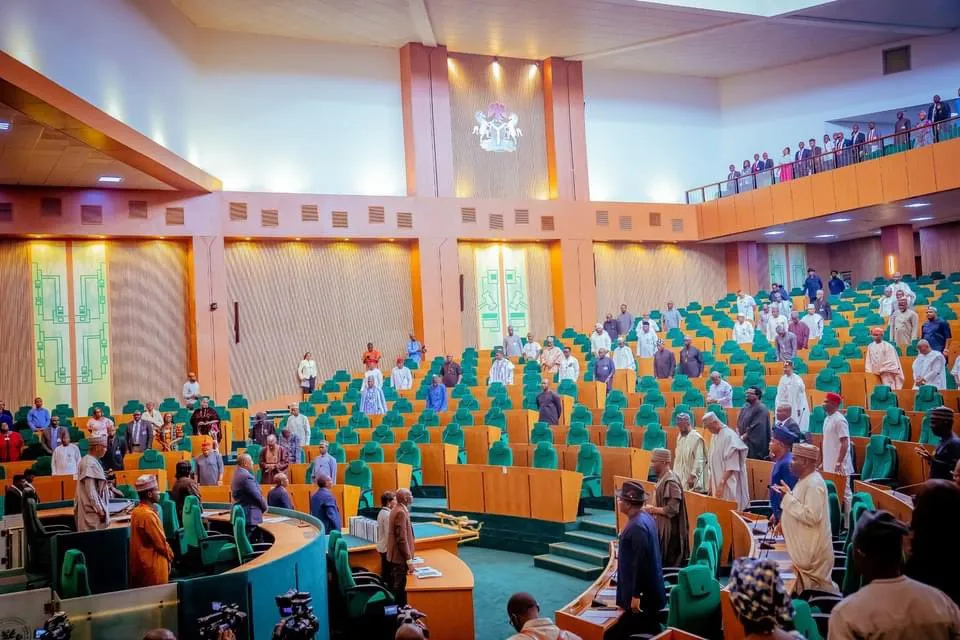

The Nigerian House of Representatives has officially approved President Bola Tinubu’s plan to raise over $2.3 billion from foreign sources. This substantial borrowing package is designed to tackle a few key financial objectives for the country, primarily to part-finance the 2025 national budget deficit and refinance a major maturing debt obligation.
Specifically, the plan authorises two main components: securing approximately $1.23 billion in new external loans to help plug the gap in the 2025 budget, and using the remaining $1.12 billion to pay off a substantial Eurobond that is due to mature in November 2025. This refinancing is a standard practice in global financial markets, crucial for avoiding a payment default and maintaining Nigeria’s credit standing with international investors.
The government intends to access these funds through a combination of methods in the international capital market, including issuing new Eurobonds, arranging loan syndications, securing bridge-finance facilities, or through direct borrowing from international financial institutions.
In a move to diversify its funding sources, the approval also includes the option to issue a standalone debut Sovereign Sukuk of up to $500 million in the international market. A Sukuk is an Islamic financial certificate, similar to a conventional bond but structured to comply with Shariah law, making it an attractive investment for investors who adhere to ethical or religious financial principles. Nigeria has had success with domestic Sukuk issuances for infrastructure projects and is now looking to tap into the global Islamic finance pool.
The Debt Management Office (DMO) and financial analysts view this external borrowing as a strategic economic move. The inflow of foreign currency is expected to provide a short-term boost to Nigeria’s external reserves, which is vital for providing liquidity in the foreign exchange market. This increased supply of dollars could help the Central Bank of Nigeria (CBN) in its efforts to stabilise the volatile naira and manage the exchange rate.
Furthermore, by securing external funding for part of the budget deficit, the government may reduce its reliance on heavy domestic borrowing. Historically, excessive domestic borrowing has been criticised for ‘crowding out’ the private sector by driving up local interest rates and limiting the capital available for business investment. Moderating domestic borrowing could ease pressure on local bond markets and potentially lower the government’s overall borrowing costs in the long run.
However, the strategy is not without its economic risks. The immediate challenge is that increasing the external debt stock naturally exposes the country to greater exchange rate risk, as future debt servicing payments must be made in foreign currency. Should the naira depreciate further, the cost of repaying the loans will rise significantly in local currency terms. While the Eurobond refinancing is essential for fiscal credibility, the growing debt burden underscores a persistent structural problem: Nigeria’s weak revenue generation capacity. Long-term debt sustainability will ultimately depend on the government’s ability to implement fiscal reforms that substantially improve tax collection and revenue from non-oil sectors to reduce the continuous need for loans to finance its operations.