
Wednesday, July 22, 2026
  • Login
No Result
View All Result
The Business Times
  • News
  • BT Exclusive
  • Economy
  • Business
  • Financial Markets
  • Politics
  • Energy
  • Insights
  • Sports
  • News
  • BT Exclusive
  • Economy
  • Business
  • Financial Markets
  • Politics
  • Energy
  • Insights
  • Sports
No Result
View All Result
The Business Times
No Result
View All Result
Home Agriculture

Africa’s Top Producer Still Imports Palm Oil

byStephen Abebor
July 22, 2026
in Agriculture, Business, Economy
0
Africa’s Top Producer Still Imports Palm Oil
6
VIEWS
Share on FacebookShare on Twitter

Nigeria’s persistent palm oil supply deficit continues to fuel informal cross-border trade despite government efforts to protect domestic producers through import restrictions and border enforcement.

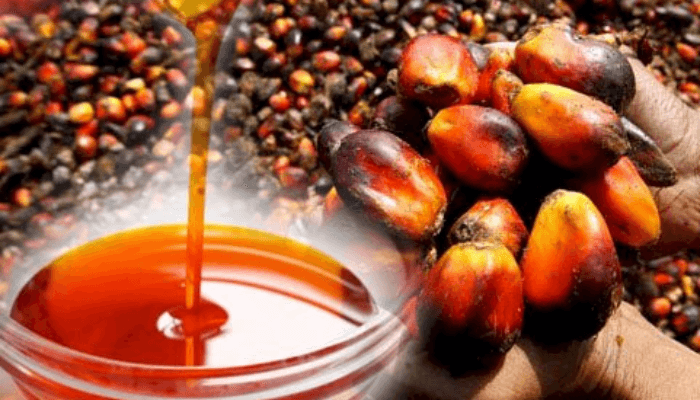
Although Nigeria is Africa’s largest producer of crude palm oil, domestic output has consistently lagged demand. According to industry and international agricultural estimates, the country produces about 1.5 million metric tonnes (MMT) of crude palm oil annually, while consumption exceeds 2.5 MMT, leaving a supply gap of roughly one million tonnes that is met through imports and informal cross-border trade.

Malaysia and Indonesia remain Nigeria’s principal external suppliers, while additional volumes enter the country through neighbouring Benin and Cameroon, both legally and through unofficial channels. Trade experts and regional studies have long identified the Benin-Nigeria corridor as a major route for trans-shipment, where palm oil imported into Benin may be re-exported informally into Nigeria, bypassing official customs procedures. Similar studies indicate that a significant share of palm oil produced in Cameroon’s border regions also finds its way into Nigerian markets through informal trade networks.

The structural supply deficit has persisted despite Nigeria’s vast oil palm resources. The country has more than three million hectares under oil palm cultivation, yet productivity remains among the lowest in major producing nations. More than 80% of production comes from smallholder farmers, many of whom rely on ageing plantations, low-yield seedlings and traditional processing methods that limit output and increase production costs.

Industry groups have also warned that domestic processors continue to operate below installed capacity due to insufficient supplies of fresh fruit bunches and the high cost of production. Meanwhile, fluctuations in international crude palm oil prices and exchange rate movements continue to influence the competitiveness of imported palm oil in the Nigerian market.

Analysts say addressing informal imports will require more than tighter border surveillance. They argue that expanding domestic production through replanting programmes, improved seedlings, mechanisation, better processing facilities and increased access to finance for smallholder farmers would help narrow the supply gap over the medium term.

Until local production grows sufficiently to meet domestic demand at competitive prices, Nigeria is expected to remain reliant on imported palm oil, while informal cross-border trade is likely to persist despite government efforts to strengthen the formal market and support local producers.

Tags: Agricultural policy Nigeriaagricultural supply chain Africacrude palm oil pricesexchange rate impact importsfood security West Africainformal cross-border tradelocal processing capacityNigeria import restrictionsNigeria palm oil deficitoil palm cultivationpalm oil imports Nigeriasmallholder farmers Nigeria
Stephen Abebor

Stephen Abebor

Next Post
Nigeria’s Crypto Market Rebounds as SEC Expands Regulated Exchanges

Nigeria's Crypto Market Rebounds as SEC Expands Regulated Exchanges

Leave a Reply Cancel reply

Your email address will not be published. Required fields are marked *

Recommended

Federal Government Suspends Controversial Free On Board Levy Amid Industry Pushback

Federal Government Suspends Controversial Free On Board Levy Amid Industry Pushback

10 months ago
Women Journalists Urged To Champion Child Protection Advocacy

Women Journalists Urged To Champion Child Protection Advocacy

3 months ago

Popular News

  • FG Seeks Fresh Investment as It Plans N729bn Power Bond to Revive Electricity Sector

    0 shares
    Share 0 Tweet 0
  • Electricity Act 2023: Two Years On – Why State Power Reforms Are a Mixed Bag

    0 shares
    Share 0 Tweet 0
  • Nigeria’s Crypto Market Rebounds as SEC Expands Regulated Exchanges

    0 shares
    Share 0 Tweet 0
  • Africa’s Top Producer Still Imports Palm Oil

    0 shares
    Share 0 Tweet 0
  • Nigeria’s Highest-Revenue Companies in the Spotlight

    0 shares
    Share 0 Tweet 0

Connect with us

Facebook Twitter Instagram TikTok

Newsletter

Pages

  • About Page
  • Contact
  • Domestic Gas Sales Rise 30% as Nigeria’s Energy Reforms Gain Traction
  • Privacy Policy
  • Terms & Conditions

Navigation

  • News
  • BT Exclusive
  • Economy
  • Business
  • Financial Markets
  • Politics
  • Energy
  • Insights
  • Sports

© 2025 The Business Times NG .

Welcome Back!

OR

Login to your account below

Forgotten Password?

Retrieve your password

Please enter your username or email address to reset your password.

Log In
No Result
View All Result
  • Home
  • News
  • BT Exclusive
  • Economy
  • Business
  • Financial Markets
  • Politics
  • Energy
  • Insights
  • Sports

© 2025 The Business Times NG .