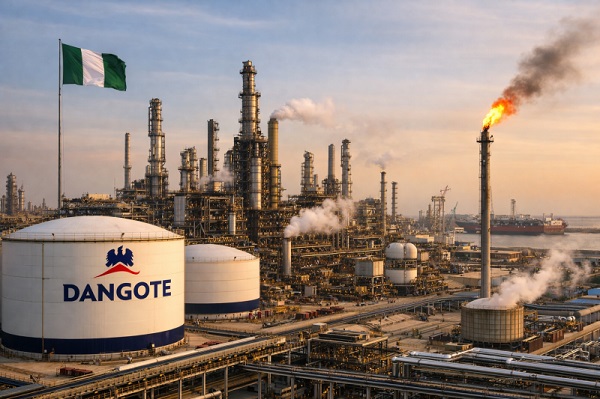

A pricing dispute between Africa’s largest refinery and Nigeria’s fuel marketers has spilled into the country’s downstream market, disrupting supply and pushing depot prices sharply higher. Dangote Petroleum Refinery, the $20 billion, 650,000-barrel-per-day facility outside Lagos, moved on July 13 to price domestic fuel sales in U.S. dollars rather than naira, voiding existing naira invoices and setting new benchmarks for petrol, diesel and jet fuel.
The shift unwinds Nigeria’s “naira-for-crude” arrangement, introduced in 2024 to ease dollar demand by letting local refiners pay for crude in local currency. Dangote has said the program hasn’t delivered enough domestic crude, forcing costly dollar-denominated imports that left the refinery exposed to currency risk while it sold fuel in naira.
Marketers responded by pulling back. Independent groups including IPMAN and PETROAN warned the policy could accelerate “dollarisation” of the economy, and by mid-July, reports emerged that loading at the refinery had stopped entirely , a claim Dangote initially denied before regional marketer officials described trucks sitting idle and stranded loads. The standstill also disrupted supply to NNPCL, the state oil company.
With Dangote product scarce, marketers turned to private depots, where prices have climbed to between ₦1,200 and ₦1,250 per litre, compared with lower Dangote-linked rates before the dispute. Some filling stations, particularly in the South-West, have shut temporarily as operators wait for clarity rather than commit to volatile pricing. Officials stress there’s no formal scarcity yet, but the caution itself is straining supply chains. Renewed U.S.-Iran tensions pushing Brent crude near $90 a barrel add further pressure.
The regulatory picture is split. The Midstream and Downstream Petroleum Regulatory Authority has signaled that the Petroleum Industry Act allows dollar-cost recovery in dollars, effectively backing Dangote’s position. The Consumer Protection Commission, however, maintains that naira is the only legal tender for domestic transactions, a conflict that remains unresolved.
Government negotiators say talks with Dangote continue, centered on crude allocation volumes and import licenses issued to rival importers. Officials have signaled they won’t be forced into concessions, suggesting expanded import approvals as a fallback if talks stall.
The outcome will shape retail fuel prices nationwide. For now, marketers are holding back on major purchases, wary of buying today at a price that could shift tomorrow, leaving Nigeria’s fuel market in a holding pattern with no clear resolution in sight.