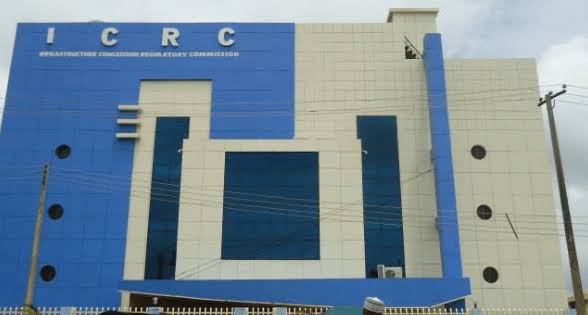

Nigeria must attract roughly $100 billion in infrastructure investment every year for the next 17 years to close an estimated $2.3 trillion infrastructure deficit, according to the Infrastructure Concession Regulatory Commission (ICRC), highlighting the scale of funding required to modernise Africa’s largest economy.
Speaking in Abuja on June 23, 2026, ICRC Director-General Dr. Jobson Ewalefoh said government revenues alone cannot finance the country’s vast infrastructure requirements, underscoring the need for deeper private-sector participation in critical sectors including transportation, power generation, transmission networks, rail systems, ports, and social infrastructure.
The announcement comes as Nigeria seeks to accelerate economic growth, improve productivity, and strengthen competitiveness amid persistent infrastructure bottlenecks that continue to constrain business activity and raise operating costs across multiple industries.
To help unlock private capital, the ICRC unveiled a new Model Public-Private Partnership (PPP) Agreement aimed at standardising project contracts and reducing the lengthy negotiations that have historically delayed infrastructure transactions.
According to the commission, the framework is designed to improve transparency, clarify risk allocation between public and private partners, and provide investors with greater certainty regarding project implementation and dispute resolution. These measures are expected to enhance investor confidence at a time when governments globally are competing for long-term infrastructure capital.
Public-private partnerships allow private investors to finance, build, operate, or maintain public assets under agreed contractual arrangements, enabling governments to deliver major projects without relying exclusively on budgetary spending. In Nigeria, PPPs have increasingly become a preferred financing model as fiscal pressures, debt-service obligations, and competing social expenditures limit the government’s ability to fund large-scale infrastructure directly.
Analysts say the scale of Nigeria’s infrastructure challenge reflects decades of underinvestment in critical assets. Deficiencies in road networks, electricity supply, rail connectivity, and logistics infrastructure continue to increase production costs for businesses and reduce economic efficiency. The World Bank and other development institutions have repeatedly identified infrastructure investment as one of the most effective ways to boost productivity, attract foreign direct investment, and create jobs.
The ICRC’s estimate of a $100 billion annual funding requirement also underscores the urgency of mobilising domestic pension funds, institutional investors, development finance institutions, and international infrastructure funds to support long-term projects.
Officials warned that failure to address the infrastructure deficit could slow economic expansion, weaken industrial development, and limit improvements in living standards. Conversely, sustained investment could unlock significant economic gains by improving mobility, expanding access to electricity, lowering logistics costs, and supporting broader private-sector growth.
For policymakers, the challenge now lies not only in attracting capital but also in ensuring projects are structured, executed, and regulated efficiently enough to deliver measurable economic returns over the coming decades.