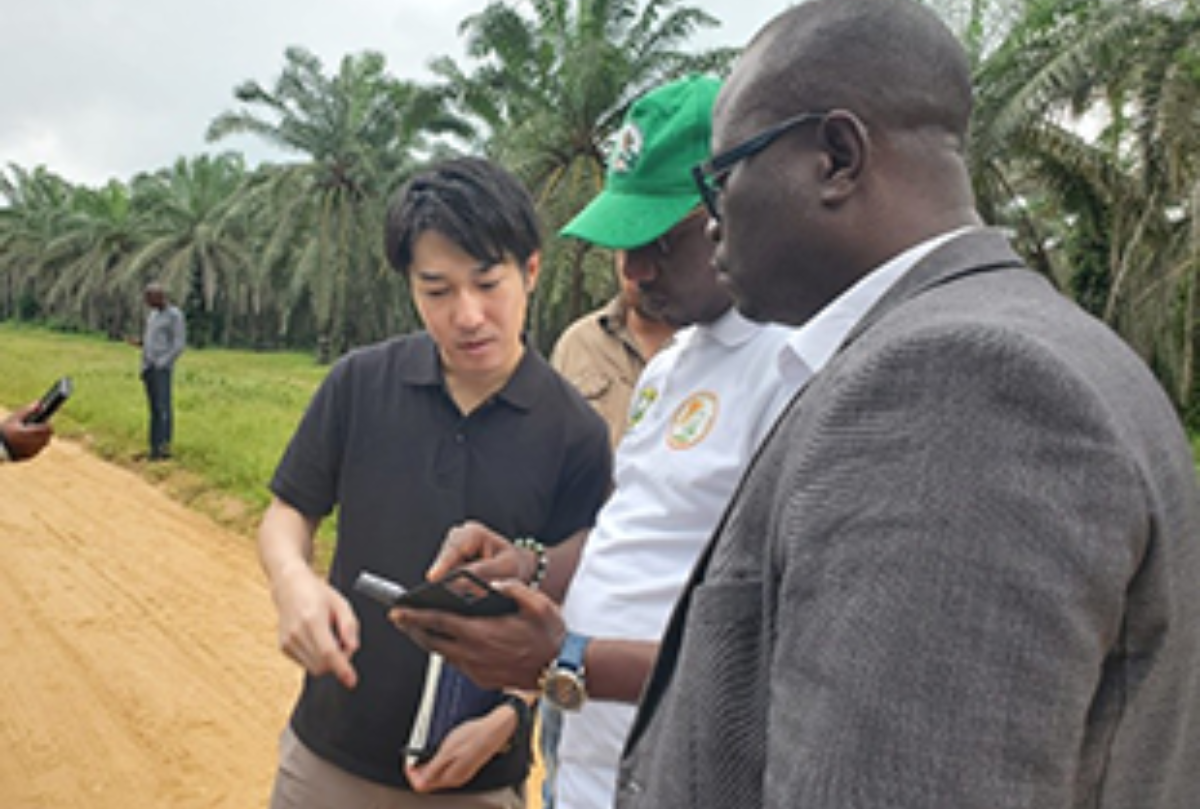

Japan’s NEC Corporation has launched a groundbreaking digital agriculture initiative in partnership with Côte d’Ivoire’s Ministry of Agriculture, Rural Development and Food Production, in a move expected to reshape the West African nation’s farming sector. The project, developed alongside NEC Africa (Pty) Ltd, seeks to drive agricultural modernisation, improve food security, and create more equitable access to key inputs through the integration of advanced digital technologies.
The initiative is co-financed by the Japan International Cooperation Agency (JICA) and the African Development Bank (AfDB) under an emergency food security programme, reflecting a broader effort to mitigate the economic shocks of climate change, rising fertiliser costs, and global supply chain disruptions. Agriculture remains the backbone of Côte d’Ivoire’s economy, accounting for roughly 20% of GDP and employing nearly half of the country’s workforce. However, the sector has faced persistent challenges ranging from low productivity to inefficient input distribution systems that leave smallholder farmers vulnerable.
At the centre of NEC’s intervention are two major technologies — the e-Voucher system and CropScope, a precision agriculture platform. The e-Voucher system integrates biometric ID verification to ensure transparency and traceability in the distribution of farming inputs such as seeds, fertilisers, and pesticides. This aims to eliminate leakages, prevent fraud, and ensure that subsidies and inputs reach the intended beneficiaries. The system will be particularly critical in rural areas where inefficiencies and corruption have historically undermined the impact of government agricultural programmes.
Complementing this is the CropScope platform, which uses satellite imagery and data analytics to digitally monitor approximately 30,000 hectares of farmland. The platform provides farmers and agricultural officers with real-time information on soil conditions, fertiliser requirements, and optimal harvest timing. NEC says the system will not only enhance productivity but also promote more sustainable land management by reducing the overuse of chemicals and improving water efficiency.
Economically, the project aligns with Côte d’Ivoire’s national strategy to strengthen food self-sufficiency and reduce dependence on imports amid volatile global commodity markets. The country, one of the world’s leading producers of cocoa, has been seeking to diversify its agricultural base and boost yields in staple crops such as rice, maize, and cassava. By integrating digital tools into the production cycle, the government hopes to make farming more resilient and commercially viable, particularly for smallholders who constitute the majority of agricultural producers.
NEC’s involvement also signals Japan’s growing engagement in Africa’s digital and agritech ecosystem. Through its partnership with JICA and AfDB, the company is leveraging public-private cooperation to deliver technology-based solutions that address structural economic vulnerabilities. “We see this as a step towards creating data-driven agricultural economies across Africa,” NEC said in a statement, noting that the technologies deployed in Côte d’Ivoire could serve as a model for other developing nations seeking to modernise their food systems.
Experts argue that such digital interventions could help African economies unlock significant productivity gains. According to the World Bank, improving digital access and efficiency in agriculture could increase smallholder income by up to 40% and significantly reduce post-harvest losses. In Côte d’Ivoire, where nearly 60% of the population lives in rural areas, digital tools like e-Vouchers and remote monitoring could bridge the gap between traditional farming practices and modern agribusiness models, enabling better credit access and market integration.
The project also carries potential fiscal benefits for the Ivorian government. By digitising the distribution of subsidies and inputs, authorities can improve transparency and reduce wastage, easing pressure on public finances. Furthermore, accurate data generated from CropScope could support policy planning, climate adaptation measures, and insurance schemes, making the agricultural sector more resilient to both economic and environmental shocks.
For farmers, the shift could mean greater predictability and inclusion. Smallholders who often rely on informal networks for inputs and market access stand to benefit from verified, data-driven systems that link them directly to suppliers and buyers. This could reduce costs, improve yields, and foster entrepreneurship in the rural economy.
In the long term, NEC and its partners aim to extend the initiative beyond Côte d’Ivoire, introducing the same technologies across other developing nations facing similar agricultural and food security challenges. As climate change continues to threaten crop productivity across Africa, such digital partnerships could play a vital role in building the continent’s resilience and ensuring that growth in connectivity translates into tangible improvements in livelihoods.
By combining innovation, transparency, and collaboration, the NEC-led project represents a significant step toward transforming African agriculture into a more sustainable, efficient, and economically empowering sector, one that not only feeds its people but also drives inclusive development.