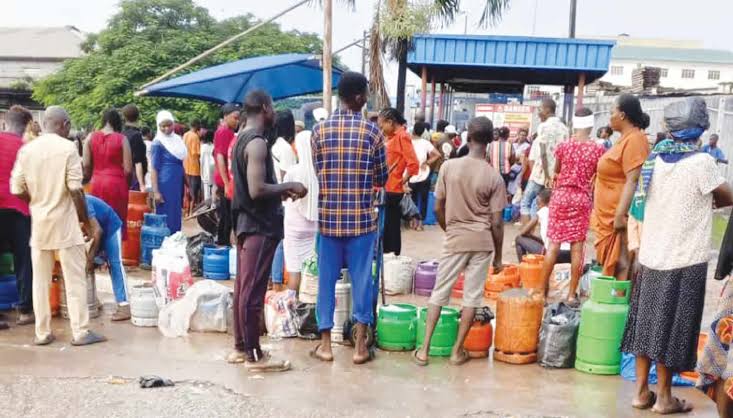

Cooking gas scarcity continues to affect households and small businesses across Nigeria, even as market operators confirm the arrival of fresh liquefied petroleum gas (LPG) imports intended to stabilize supply. The disconnect between import inflows and retail availability has underscored structural weaknesses in the country’s downstream gas distribution network, leaving consumers to contend with intermittent supply, rising prices, and long queues at retail outlets.
Industry operators attribute the persistent shortage to a combination of logistics bottlenecks and inefficiencies within the domestic distribution chain. While imported cargoes are reportedly entering coastal terminals, delays in vessel discharge, limited storage capacity, and transportation constraints have slowed the movement of product from ports to inland depots. In addition, trucking shortages and rising haulage costs have further constrained the flow of gas to retail markets. Market participants also point to periodic maintenance activities at key terminals and congestion at depots as contributing factors.
Beyond logistics, macroeconomic pressures are also shaping supply dynamics. Foreign exchange volatility has increased the cost of importation, making LPG procurement more expensive for marketers. This has translated into tighter margins across the value chain, discouraging rapid restocking in some instances. There are also concerns that uneven distribution and localized hoarding behavior during periods of anticipated scarcity have intensified regional supply imbalances.
For consumers, the impact has been immediate and pronounced. Retail prices have climbed in several urban centers, with households reporting higher costs for refilling standard cylinders. Small businesses, particularly food vendors, restaurants, and bakeries have been among the hardest hit, as energy costs now account for a larger share of operating expenses. In some locations, consumers are forced to switch temporarily to more expensive or less efficient alternatives, further compounding household energy strain.
Analysts argue that the current situation highlights a deeper structural challenge: Nigeria’s growing demand for LPG is not being matched by a commensurate expansion in storage, transportation, and distribution infrastructure. While imports provide short-term relief, they are insufficient to resolve systemic constraints that limit product availability at the retail level.
Looking ahead, market stability is likely to depend on coordinated improvements across the supply chain, including expanded storage capacity, improved inland logistics, and more efficient depot operations. Without these reforms, the sector may continue to experience cyclical shortages, even during periods of strong import activity.