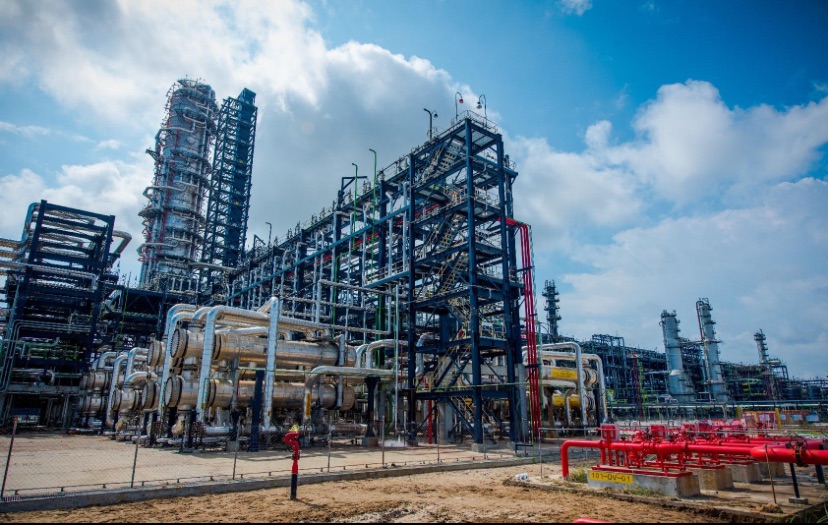

Nigeria’s spending on petrol imports dropped dramatically in the first quarter of 2026, highlighting a major shift in the country’s fuel supply system as local refineries continue to increase production.
According to the latest foreign trade data released by the National Bureau of Statistics (NBS), Nigeria spent just N87.4 billion on petrol imports between January and March 2026. This represents a massive decline of more than 96 percentcompared to the N2.27 trillion spent during the same period in 2025.
The sharp drop signals a significant change in Nigeria’s downstream petroleum industry. For many years, petrol ranked among the country’s most imported products. However, in the first quarter of 2026, petrol was completely absent from the list of Nigeria’s top imported commodities.
Instead, the country’s major imports included crude petroleum products, gas oil, wheat, data transmission equipment, used vehicles, motorcycles, agricultural machinery, medicines, aircraft parts, sugar cane products, herbicides, and fuel additives.
The NBS report also revealed that Nigeria’s total imports stood at N13.62 trillion during the first quarter of 2026. This was lower than the N16.64 trillion recorded in the same period of 2025, reflecting a broader reduction in import spending.
China remained Nigeria’s largest source of imports, followed by the United States, India, Germany, and the United Arab Emirates.
Beyond petrol, imports of other petroleum products also declined sharply. The value of these imports fell to N748.1 billion in the first quarter of 2026, compared to over N5 trillion recorded in the same period of 2025.
Historical trade records show that Nigeria spent N2.69 trillion on petrol imports in the first quarter of 2022. The figure dropped slightly in 2023 before rising sharply in 2024. It later fell in 2025 and then plunged to its current record-low level in 2026.
The latest numbers mean that for every N100 spent on petrol imports in the first quarter of 2025, only about N4 was spent during the same period in 2026.
Industry analysts attribute the decline to the growing contribution of domestic refineries, particularly the Dangote Petroleum Refinery, which has significantly reduced Nigeria’s dependence on imported fuel.
For decades, Nigeria relied heavily on imported petrol despite being Africa’s largest crude oil producer. The country’s state-owned refineries struggled with poor performance, forcing the government and fuel marketers to spend huge amounts importing refined products.
The situation began to change after major investments in local refining capacity. The commissioning of the 650,000-barrels-per-day Dangote Refinery in Lekki, Lagos, marked a turning point for the sector.
Since beginning petrol production, the refinery has steadily increased output and supplied fuel across the country. Data from the Nigerian Midstream and Downstream Petroleum Regulatory Authority showed that the refinery supplied over 40 million litres of petrol daily in January 2026, accounting for nearly 62 percent of national supply.
By February, local production accounted for more than 92 percent of Nigeria’s petrol supply as imports fell sharply. The trend continued in March and April, with Dangote remaining the dominant supplier to the domestic market.
The disappearance of petrol from Nigeria’s top import list is being viewed as one of the strongest signs yet that local refining is reshaping the country’s trade patterns. Experts believe the continued reduction in fuel imports could help conserve foreign exchange, improve Nigeria’s trade balance, reduce pressure on the naira, and keep more economic value within the country.
The first-quarter figures therefore represent a landmark moment for Nigeria’s energy sector, showing that local refining is beginning to deliver long-awaited results and reducing the nation’s dependence on imported fuel.