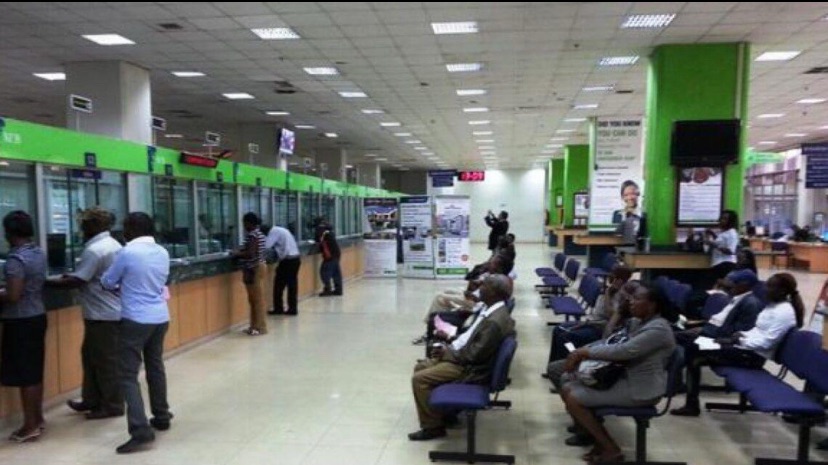

Nigeria’s banking industry recorded a significant increase in revenue from account maintenance charges during the first quarter of 2026, reflecting growing banking activity and stronger economic momentum across the country.
An analysis of the unaudited financial statements of 11 listed banks showed that the lenders generated a combined N209.18 billion from account maintenance fees between January and March 2026. This represents a 14.07 per cent increase compared to the N183.37 billion earned during the same period in 2025.
The review also revealed that total fee and commission income rose to N984.47 billion in the first quarter of 2026 from N866.30 billion a year earlier, representing a 13.64 per cent year-on-year growth.
Account maintenance fees are charges approved by the Central Bank of Nigeria (CBN) for current account holders. The charges help banks recover the cost of managing and maintaining active transactional accounts.
Among the banks reviewed, Zenith Bank recorded the highest income from account maintenance charges, earning N25.07 billion during the period. Access Holdings followed with N16.68 billion, while Guaranty Trust Holding Company (GTCO) generated N15.12 billion. United Bank for Africa (UBA) posted N13.26 billion, while First Holdco earned N10.46 billion.
Ecobank recorded the largest fee and commission income overall at N237.80 billion, supported by cash management services, brokerage fees, and portfolio management activities. Access Holdings came next with N205.03 billion, followed by UBA with N124.07 billion, First Holdco with N96.12 billion, and Zenith Bank with N84.79 billion.
Several banks recorded strong growth in account maintenance earnings. GTCO led the pack with a 42.15 per cent increase, rising from N10.63 billion to N15.12 billion. Sterling Financial Holdings posted a 38.31 per cent increase to N2.38 billion, while Wema Bank’s earnings from the category climbed by 31.3 per cent to N3 billion.
Zenith Bank also recorded strong growth, with account maintenance income rising by 30.81 per cent. UBA followed closely with a 27.65 per cent increase.
In terms of overall fee and commission income, Zenith Bank delivered the strongest performance with a growth rate of 41.43 per cent. Fidelity Bank recorded a 39.7 per cent increase, while Sterling Financial Holdings, Stanbic IBTC Holdings, and First Holdco also posted notable gains.
However, not every bank experienced growth in account maintenance revenue. Fidelity Bank saw a slight decline of 2.52 per cent, while Stanbic IBTC reported a 4.98 per cent drop in account transaction fees, its equivalent category.
Industry experts say the increase in banking fees reflects rising business activity and growing confidence in the Nigerian economy.
According to the Chief Executive Officer of the Centre for the Promotion of Private Enterprise, Dr. Muda Yusuf, stronger economic activity naturally leads to more banking transactions, which in turn boosts fee income and profitability for financial institutions.
He noted that improving business confidence, increased investment activity, and a more stable economic environment are encouraging greater use of banking services across the formal sector.
The banking sector has also benefited from ongoing reforms introduced by the Central Bank of Nigeria. These include the banking recapitalisation programme aimed at strengthening financial institutions and supporting long-term economic growth.
Recent economic indicators also point to improving conditions. Nigeria’s private sector expanded to a nine-month high in May 2026, driven by stronger demand, increased production, improved logistics, and new product launches.
With economic activity gathering pace and financial reforms continuing, analysts expect banks to maintain strong earnings growth in the months ahead.