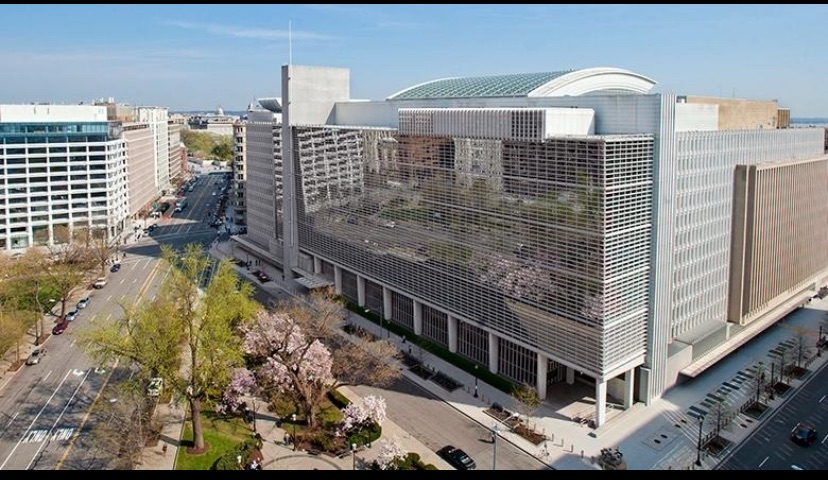

Nigeria’s debt exposure to the concessional lending arm of the World Bank, the International Development Association (IDA), recorded a slight decline in the first quarter of 2026, according to the institution’s latest financial report.
The report showed that Nigeria’s exposure dropped from $18.7 billion in December 2025 to $18.5 billion by March 31, 2026. This represents a decrease of $200 million, or 1.1 per cent, within three months.
Despite the quarterly decline, Nigeria’s debt exposure remains significantly higher than it was a year ago. In March 2025, the country’s exposure stood at $17.3 billion. The latest figure means Nigeria’s debt to the IDA increased by $1.2 billion year-on-year, representing a 6.9 per cent rise.
The World Bank explained that while the short-term drop may suggest a slowdown in fresh concessional borrowing, the yearly increase highlights Nigeria’s continued dependence on low-cost international financing to support development projects and economic programmes.
The IDA also confirmed that Nigeria remains its third-largest borrower globally, behind Bangladesh and Pakistan.
According to the report, Bangladesh maintained the highest exposure at $22.7 billion, followed by Pakistan with $19.2 billion, while Nigeria came next with $18.5 billion. Other major borrowers included Ethiopia with $14.4 billion, Tanzania with $14.3 billion, and Kenya with $13.2 billion.
The World Bank further disclosed that total loans outstanding under the IDA stood at $230.8 billion as of March 2026, slightly lower than the $231.1 billion recorded at the end of December 2025. The small decline points to a moderate slowdown in the institution’s overall lending activities.
The report also noted that only 0.4 per cent of the IDA loan portfolio was classified as non-accrual, meaning very few loans were facing repayment problems. In addition, the institution said it had set aside about $6.3 billion as provisions for potential loan losses, representing roughly 2.0 per cent of its total exposure.
Nigeria’s share of the IDA portfolio remains substantial. The country’s $18.5 billion exposure accounts for approximately 8.0 per cent of the institution’s entire loan portfolio. It also represents about 13.3 per cent of the exposure tied to the IDA’s ten largest borrowing nations.
The World Bank warned that the concentration of lending among a small number of countries could pose risks to the institution if any of those countries encounter serious repayment difficulties in the future.
Several countries also increased their use of concessional financing over the past year. Ethiopia’s exposure rose from $13.2 billion to $14.4 billion, while Tanzania’s climbed from $12.6 billion to $14.3 billion. Pakistan and Bangladesh also recorded notable increases, alongside smaller rises from Ghana and other nations.
Meanwhile, Nigeria’s growing debt profile continues to attract attention. Earlier in April 2026, the Debt Management Office (DMO) revealed that the country’s total public debt rose to N159.27 trillion at the end of the fourth quarter of 2025, up from N153.29 trillion recorded in the previous quarter.
The increase represented an additional N5.98 trillion within three months.
The Federal Government has also requested approval for another $6 billion in external loans, a move that has generated debate among financial analysts and economic experts.
Some analysts believe the recent quarterly decline in IDA exposure may indicate a temporary reduction in new concessional borrowing. However, many say the yearly increase confirms that Nigeria still relies heavily on foreign development financing to support infrastructure, social programmes, and economic reforms.
Others also warned that the heavy concentration of IDA loans among a few developing countries could create financial risks for the World Bank if global economic conditions worsen or repayment challenges emerge.