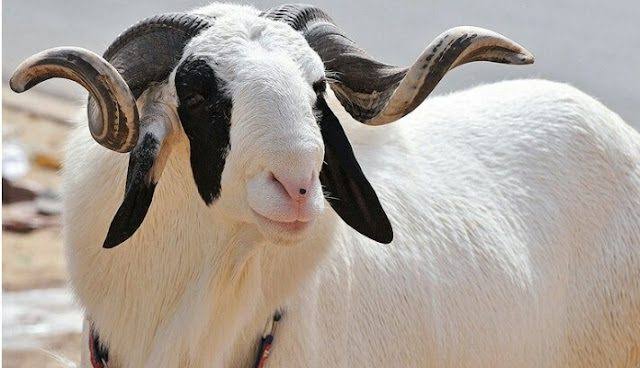

The cost of sacrificial animals has surged sharply across Nigeria ahead of Eid al-Adha, with households facing price increases of more than 300% in key livestock markets, particularly in northern trading hubs such as Dutse.
In Dutse, capital of Jigawa State, small rams are now selling between ₦200,000 and ₦700,000, while larger, well-fattened animals are fetching as much as ₦1 million. By contrast, similar livestock sold for around ₦130,000 a year earlier, underscoring the intensity of inflationary pressure in Nigeria’s informal livestock economy.
The price shock is not isolated. Market data from traders indicates similar spikes in major urban centres including Abuja and Lagos, where demand typically peaks in the weeks leading up to the Islamic festival. In some high-end markets, premium rams are also reaching the ₦1 million threshold.
Traders and livestock dealers attribute the escalation to rising input costs across the supply chain. Animal feed prices have increased significantly due to higher grain costs, while veterinary medication and transport expenses have also climbed, squeezing margins for pastoralists and wholesalers. These cost pressures are being passed directly to consumers in a market with strong seasonal demand and limited short-term supply elasticity.
For many households, the inflationary spike is reshaping traditional consumption patterns. Some families report pooling funds with neighbours or extended relatives to purchase a single cow instead of individual rams, a shift that reflects both economic strain and adaptive cultural practice. Others are scaling down expectations or opting out of the sacrifice entirely.
Economists note that the surge reflects broader structural challenges in Nigeria’s livestock value chain, including dependence on rain-fed grazing systems, weak storage and logistics infrastructure, and limited formalised feed production capacity. These constraints amplify price volatility during peak demand periods such as Eid al-Adha.
With inflationary pressures still elevated across food and energy markets, analysts warn that livestock prices may remain unstable in the near term, particularly if feed supply disruptions persist. For now, the Eid season is exposing the fragility of Nigeria’s livestock market and the widening gap between income levels and cultural consumption costs.