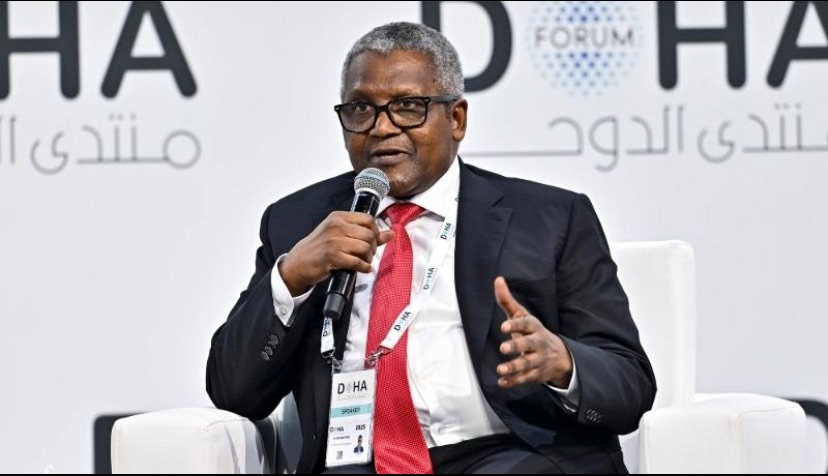

Ugandan President Yoweri Museveni has revealed details of his recent meeting with Nigerian billionaire businessman Aliko Dangote, where both leaders discussed plans for a proposed regional oil refinery project in East Africa.
The meeting took place in Nakasero, Uganda, and focused on how African countries can work together to strengthen the region’s energy sector and reduce dependence on imported petroleum products.
According to Museveni, Uganda’s long-standing position has always been centered on adding value to its natural resources instead of exporting them in raw form. He explained that exporting crude oil without refining it allows foreign countries and companies to make the real profits from finished petroleum products.
The Ugandan president said it would not make economic or strategic sense for Uganda to continue selling crude oil while other nations refine it and enjoy the larger financial benefits. He stressed that refining oil within Africa would help create jobs, improve industrial growth, and strengthen regional economies.
Museveni described the proposed regional refinery as an important project that could support African unity and economic cooperation. He said East African countries need to move away from operating as separate and weak markets if they want to achieve large-scale industrial growth.
According to him, cooperation among East African nations would make projects such as a regional refinery more practical and beneficial to millions of people across the region.
He added that Uganda remains committed to developing its own refinery project in Hoima while also supporting broader regional energy initiatives. The Hoima refinery project has been one of Uganda’s major energy goals as the country prepares to increase oil production in the coming years.
The discussions with Dangote come as East African nations continue searching for ways to reduce reliance on imported fuel and strengthen local refining capacity. Many countries in the region still depend heavily on imported petroleum products despite having growing energy demands.
In recent years, Dangote has shown increasing interest in expanding his refining and energy investments beyond Nigeria. Discussions about possible investments in East Africa have gained attention as governments in the region push for integrated energy infrastructure that can serve multiple countries.
The proposed refinery project aligns with wider regional ambitions to create stronger supply chains and reduce the challenges caused by fragmented national markets.
Among East African nations, Kenya is considered a major player because of its strategic role in fuel imports and distribution. The country hosts important infrastructure such as the Port of Mombasa, fuel storage facilities, and pipeline networks that transport petroleum products to neighboring countries including Uganda, Rwanda, South Sudan, and parts of eastern Democratic Republic of the Congo.
Industry observers believe that stronger regional cooperation in refining and fuel distribution could improve energy security, lower transportation costs, and support long-term economic growth across East Africa.
The meeting between Museveni and Dangote highlights growing efforts by African leaders and investors to build regional industries capable of serving the continent’s increasing energy needs.