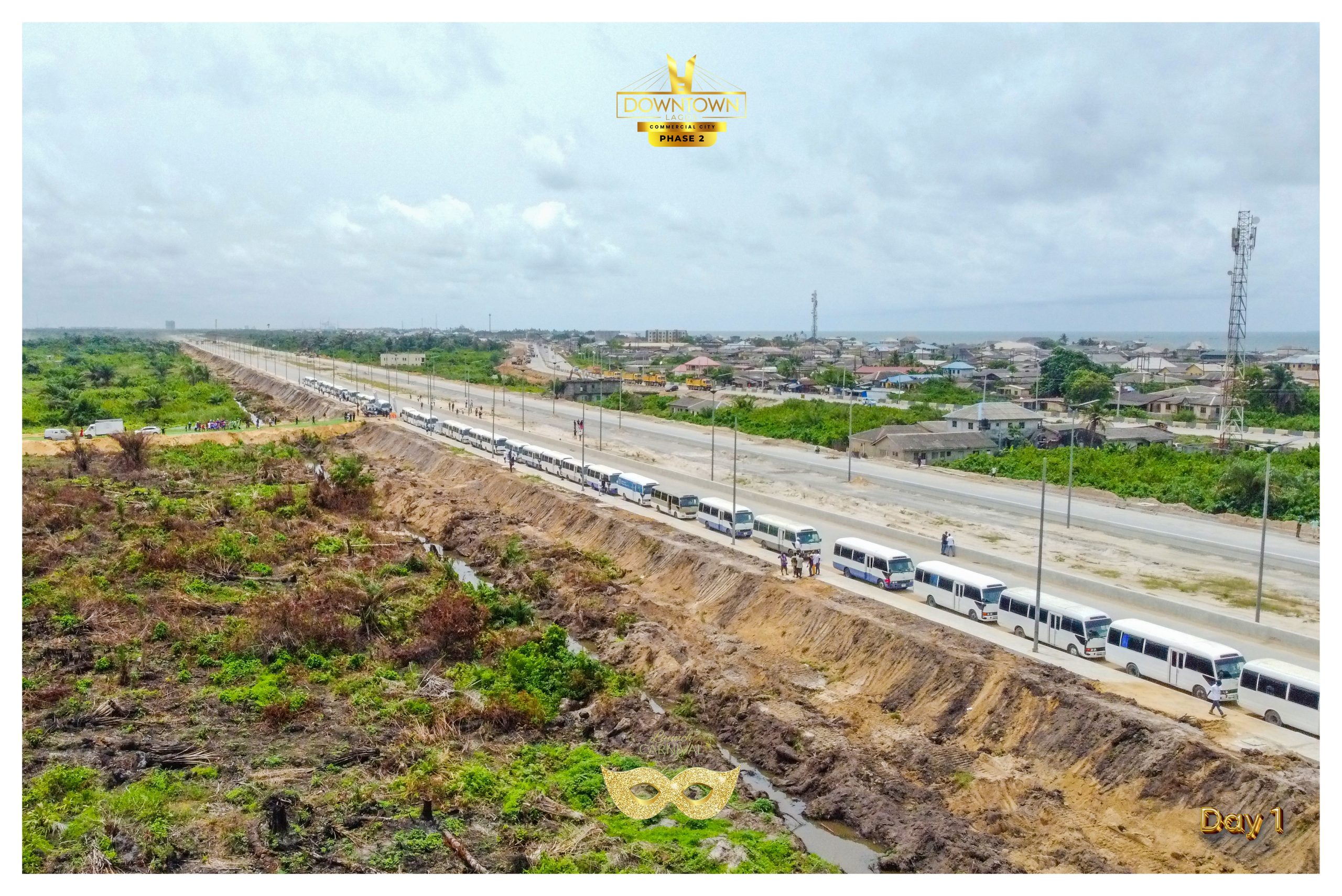

The Lagos State Government has allocated land for the development of “Downtown Lagos,” a privately driven commercial city project located within the Labour City in Ibeju‑Lekki, in a move that underscores the state’s continued reliance on public‑private partnerships to fuel urban expansion. The new destination is designed as an integrated business district that will attract investment, support enterprise activity and drive long‑term property value along one of Nigeria’s fastest‑growing economic corridors.
The choice of the Lekki corridor is strategic. The area already hosts iconic infrastructure projects, including the Dangote Refinery, the Lekki Deep Sea Port, and notable industries and manufacturing companies. According to estate developers, the concept draws on global models such as Downtown Manhattan and Singapore’s central business district, with plans for a high‑density, mixed‑use environment tailored to Nigeria’s urban expansion needs.
The unveiling event, a two‑day affair, attracted individual and institutional players as well as associations in the real estate sector, including the Lagos State chapter of the Real Estate Developers Association of Nigeria (REDAN). One developer described Downtown Lagos as “more than a real estate development; it is a deliberate effort to create a world‑class commercial ecosystem that positions Lagos as a global investment destination. We are building a city that enables enterprise, attracts capital, and delivers long‑term value for investors who understand the future of urban Africa”.
From an economic standpoint, the project reflects a deliberate strategy to decongest the traditional Lagos Central Business District on Lagos Island by creating new commercial nodes in the east. The Ibeju‑Lekki axis, already home to the deep seaport and the refinery, is emerging as a logistics and industrial hub. Adding a purpose‑built commercial city could accelerate this transformation by providing modern office, retail and residential spaces that attract both local and foreign investors. The success of the model, however, will depend on complementary investments in road networks, power supply and public transport to ensure that the new district is not isolated from the rest of the metropolis.