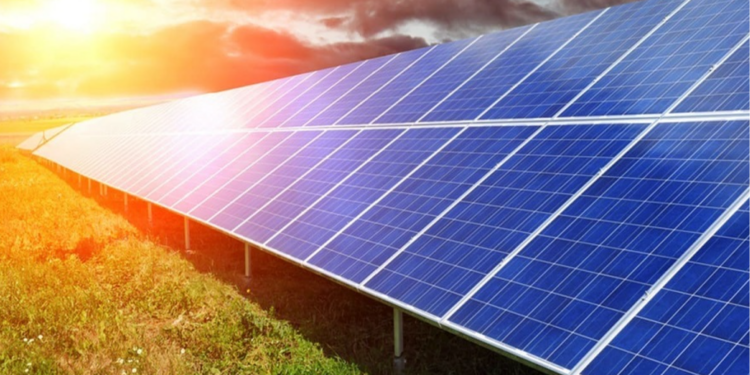

Nigeria has more than doubled its domestic solar panel manufacturing capacity to 300 megawatts, up from 120 megawatts two years ago, as the country intensifies efforts to position itself as a renewable energy hub in West Africa.
The Managing Director of the Rural Electrification Agency, Abba Aliyu, disclosed this during a webinar in Lagos, noting that the country now has a project pipeline of 3.7 gigawatts aimed at scaling clean energy deployment. Aliyu noted that the growth is being driven by policy reforms under President Bola Tinubu. He added that it is designed to attract private investment and strengthen investor confidence in the renewable energy sector. In 2025 alone, about $425 million was committed to establishing eight renewable energy manufacturing facilities.
Aliyu said Nigeria has begun exporting locally manufactured solar panels to Accra from Lagos, marking a shift toward regional supply and signalling the country’s growing role in West Africa’s clean energy market. Regulatory reforms by the Nigerian Electricity Regulatory Commission have also played a key role. Updated mini-grid rules now allow interconnected systems to operate at up to 10 megawatts, up from previous limits, enabling larger-scale renewable projects and improving clarity around licensing and grid integration.
These changes are expected to unlock new opportunities, including cross-border electricity trade in border communities where solar-powered mini-grids can supply neighbouring countries.
Aliyu highlighted the importance of regional collaboration, noting that while the West African Power Pool continues to integrate national grids, there is also a need to develop a complementary off-grid electricity market to expand access across underserved areas.
Nigeria’s electricity access model is already gaining traction across the continent, with countries such as Mozambique, Benin, Niger, and others exploring its framework for replication.
Central to this push is the Distributed Access through Renewable Energy Scale-Up programme, described as one of the largest publicly funded renewable energy initiatives globally. The programme aims to connect 17.5 million Nigerians to electricity by deploying over 2.5 million household connections and 1,350 mini-grids.
Backed by $750 million in funding, the initiative is expected to attract an additional $1.1 billion in private sector investment through a results-based financing model that requires developers to commit capital upfront before accessing incentives.
Financial institutions including Citibank Nigeria, Lotus Bank, and the International Finance Corporation are supporting the programme, alongside development finance and impact investment partners.
The agency said the structure of the initiative is already unlocking significant funding and could serve as a model for renewable energy deployment across Africa.