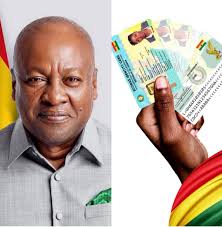

Ghana’s National Identification Authority has announced that over 19 million Ghanaians have been registered and issued with the Ghana Card, marking a significant milestone for the country’s digital identity infrastructure. The disclosure was made in a statement issued on Tuesday, April 21, to mark the 20th anniversary of the authority’s establishment under Act 707 of 2006, reflecting two decades of progress in building a foundational identity system.
According to the NIA, the national identity system now serves as the primary verification method for public service delivery, banking, healthcare, telecommunications, and electoral processes. The authority’s biometric Identity Verification System Platform has reportedly recorded over 200 million successful verifications to date, demonstrating the scale of integration between the national ID system and service delivery channels across both public and private sectors.
The NIA stated that it has evolved from a foundational registration body into a fully digitized system designed to support national governance. This evolution aligns with Ghana’s broader digital transformation agenda, which seeks to leverage technology to improve service delivery, enhance tax collection, and reduce identity fraud. The Ghana Card has become a prerequisite for accessing a wide range of services, from opening bank accounts to registering SIM cards and voting in elections.
To commemorate the two-decade milestone, the authority plans to hold a series of events, including a national launch in May, an ID Day celebration in September, and an awards ceremony in December. From an economic perspective, a robust national identity system reduces transaction costs for businesses, enables financial inclusion by simplifying Know-Your-Customer requirements, and helps government target social transfers more effectively. Ghana’s progress in this area offers lessons for other West African countries, including Nigeria, where the national identification programme has faced challenges with enrollment coverage and system integration. The 19 million figure represents a substantial portion of Ghana’s adult population, suggesting that the country is approaching universal coverage.