
Nigeria and Morocco are moving closer to finalising a major energy partnership, as both countries prepare to sign a $25 billion transcontinental gas pipeline agreement before the end of the year.
According to recent reports, the deal will formalise political and regulatory commitments for the ambitious African Atlantic Gas Pipeline, a massive infrastructure project designed to transport natural gas from Nigeria through several West African countries to Morocco and eventually into Europe.
The pipeline, which spans about 6,900 kilometres, is expected to pass through 13 countries, making it one of the largest energy projects on the continent. Its goal is to strengthen regional energy cooperation while also opening new export routes for Nigerian gas.
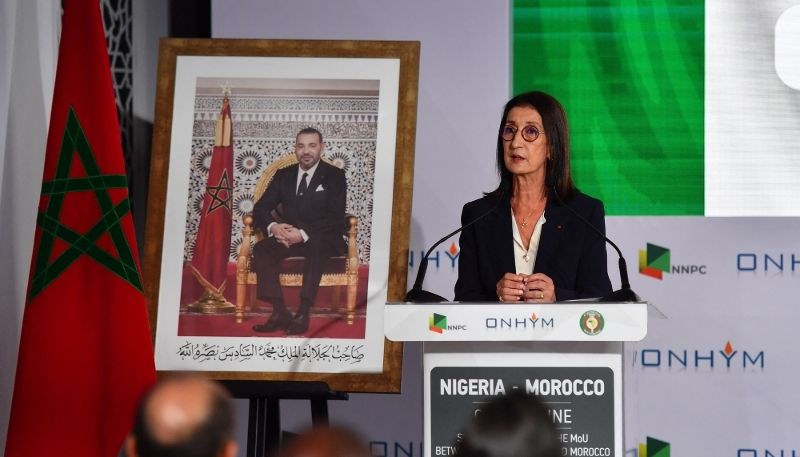
Speaking on the development, Director General of Morocco’s National Office of Hydrocarbons and Mines, Amina Benkhadra, confirmed that “an intergovernmental agreement… will be signed this year,” highlighting growing momentum behind the long planned project.
She explained that the agreement would help align participating countries and improve coordination, adding that a joint regulatory authority would be created to oversee implementation across the region.
The pipeline is expected to carry up to 30 billion cubic metres of gas annually. About half of this supply will serve domestic needs in Morocco, while the rest will be exported to European markets, helping diversify energy sources for the continent.
To ensure smooth execution, a joint venture involving the Nigerian National Petroleum Company Limited and Morocco’s hydrocarbons agency will be established. This entity will handle financing, construction, and overall project delivery.
Although investor interest in the project is said to be strong, final funding arrangements have not yet been fully secured. The financing structure is expected to combine both equity investments and debt contributions from multiple partners.
Benkhadra also noted that the project would be developed in phases rather than waiting for a single final investment decision. According to her, “the project does not rely on a single global final investment decision… each segment is designed to be developed as a standalone system,” allowing parts of the pipeline to begin operations earlier.
Beyond energy supply, the pipeline is expected to deliver wider economic benefits. It is projected to boost electricity generation, support industrial growth, and deepen economic integration across West Africa.
The initiative has also received backing from the Economic Community of West African States, reflecting its importance for regional development and cooperation.
If completed, the project could significantly enhance Nigeria’s ability to monetise its vast gas reserves while strengthening its position in the global energy market. At the same time, Morocco is expected to emerge as a key energy bridge linking Africa and Europe.
Overall, the planned agreement signals renewed political commitment from both countries to push forward one of Africa’s most ambitious infrastructure projects, with far reaching implications for energy security, trade, and economic growth across the region.