
Access to clean potable water remains elusive for millions of Nigerians who are either unconnected to public water service or endure dry taps, despite billions of naira that state governments have claimed to spend on water infrastructure over the years. The crisis has forced most people to fork out additional expenses from their meagre incomes to buy water from vendors, while plunging many others, especially those in rural communities, into avoidable health crises including cholera, diarrhoea, and typhoid fever. At least 4,778 lives were lost to cholera between 2020 and 2024, according to the Nigeria Centre for Disease Control and Prevention, while over 300 deaths had been recorded as of October 2025.
A 2022 World Bank report indicates that approximately 70 million Nigerians lack access to basic drinking water, while 114 million lack basic sanitation, a crisis driven by failing infrastructure, as piped water access dropped from 36 per cent in 1990 to 11 per cent in 2021. A similar report by the United Nations Children’s Fund says 70 per cent of water is contaminated at the point of consumption, with 117,000 children dying every year in Nigeria from water related illnesses, the highest globally. Daily Trust reports that the reality of the public water system in many states considerably falls short of the theme of this year’s World Water Day, tagged ‘Water for People and Progress,’ marked on March 22.
In Kano State, daily water demand is estimated at about 700 million litres, but current supply is far below this level due to aging infrastructure and inactive plants. Out of roughly 22 treatment plants, only a few are active, including the recently reactivated 95 year old Challawa plant. In its 2026 budget, the state allocated N40.2 billion to the water sector. Musbahu Sani, a resident of Masallacin Habibu Gwarzo in Hotoro, Nassarawa Local Government Area, said for 15 years he has been living in the area without water supply. “In the last 15 years in the Hotoro part where I live, we have not seen a drop of water from the public supply. Our only consolation is that people have installed solar powered boreholes, which usually supply the neighbourhood. We only hear about the buried pipes and the purchase of water pumping machines, but no water supply here,” he said.
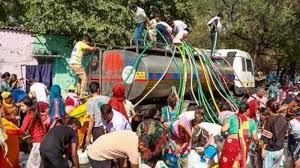
Ado Fela, who lives in the Gama area of Nasarawa LGA, said he spends an average of N1,200 daily to buy water from vendors. “We rely on Mairuwas (water vendors) who sell a jerry can for between N70 and N100 and I spend an average N1,200 daily for consumption, bath, cleaning and other domestic uses. Water scarcity has been persistent and residents have learned to live with this problem in this part of Kano,” Fela lamented.
In Lagos, a city surrounded by water, millions of residents struggle daily to access potable water. Daily water demand is estimated at 720 million gallons per day, with only 10 per cent of its population having access to public water supply. A WASH report revealed that the water crisis cuts across low, medium, and high density areas, including Ojota, Ketu, Oworonshoki, Gbagada, Isheri, Omole Phase 1, Magodo, Opebi, Oregun, Alausa, Allen, Awolowo Way, MKO Garden, Orile, Ajegunle, and Ikoyi. Other affected areas include Makoko, Ikorodu, Alapere, Agboyi Ketu, Ajeromi Ifelodun, Ajegunle, and Agege.
At Agboyi Ketu Local Council Development Area, residents said many households rely on alternatives like private boreholes, wells, water vendors, and sachet water due to unreliable public water supply. “We rely mostly on buying water from vendors and sachet water for drinking. It is expensive, and not everyone can afford it daily. Sometimes, we even resort to well water, which is not always clean,” a resident, Mrs Funke Adeyemi, said. The Commissioner for Environment and Water Resources, Tokunbo Wahab, recently hinted that the state was exploring strategic partnerships to bridge the water supply gap, setting a goal to ensure all homes have access to clean water by 2027.
In Borno State, Maiduguri residents experience severe water shortages, causing serious hardship particularly during high temperatures. Governor Babagana Umara Zulum had previously launched a coordinated response, approving the rehabilitation, upgrade, and construction of boreholes across various locations, and the conversion of 48 lower aquifer boreholes to hybrid energy systems and the construction of 50 new upper aquifer boreholes. In the 2026 approved budget, the sum of N21.35 billion was allocated to the state’s Ministry of Water Resources.
A resident of one of the newly developed areas, Muhammad Bashir Bukar, said he spent about N21,000 monthly on water alone, supplied by private water vendors popularly called “Moya.” “Whenever there is a blackout, the vendors jack up the price, sometimes up to N2000, depending on the location,” he added. An expert in water engineering, Engr Ibrahim Mohammed, said about one million people are living around the Njimtilo axis alone, “which means they require at least 1,000,000 gallons of water daily, but few places get access to water from the Borno State Water Corporation.”
In the Federal Capital Territory, the acute water shortage is biting harder, with worst affected areas including Maitama, Asokoro, Life Camp, Wuye and Jahi districts. The situation is equally dire in suburbs such as Jiwa, Gwagwa, and Idu, as well as parts of Abaji, Bwari, Gwagwalada, and Kuje area councils. A resident of Maitama, Ishaq Ibrahim, said a cart of 10 20 litre jerry cans, previously sold for N800, now costs N2,000. Mrs Ganiyat AbdulRasaq of Gwarinpa lamented, “Some households now spend close to N5,000 a day on water. That totals nearly N150,000 a month. How much is our salary?”
From an economic perspective, the water crisis imposes a regressive tax on the poor. Households without access to public water supply spend significant portions of their income on water from vendors, paying far more per litre than wealthy households connected to the grid. This expenditure crowds out spending on food, education, healthcare, and savings. For businesses, unreliable water supply increases operating costs, as enterprises must invest in boreholes, storage tanks, or purchase from vendors. The health consequences of unsafe water also impose costs on the healthcare system and reduce productivity as workers fall ill.
The pattern across states is consistent: budgets are allocated, projects are announced, but water does not flow. The disconnect between spending and outcomes suggests systemic problems in planning, execution, and maintenance. Infrastructure decays because funding for operation and maintenance is inadequate. New projects are prioritised over rehabilitation of existing ones. Political cycles reward ribbon cutting rather than sustained service delivery. Until these incentives change, the crisis will persist, and millions of Nigerians will continue to pay for water that should flow from public taps.