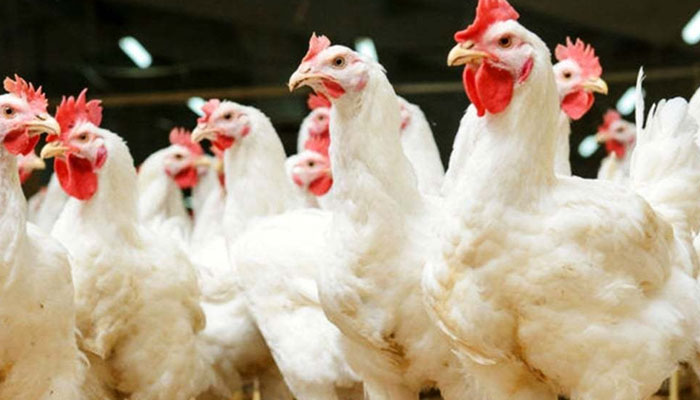

The Federal Government has introduced a newly developed chicken breed and 57 crop varieties, marking a significant expansion of Nigeria’s agricultural genetic resources aimed at boosting meat availability, enhancing food security, and improving nutritional well-being. The announcement came at the 36th meeting of the National Committee on Naming, Registration and Release of Crop Varieties, Livestock Breeds and Fisheries in Ibadan, organised by the National Centre for Genetic Resources and Biotechnology (NACGRAB). The new releases, which include high-yield varieties across 14 crops and the ‘Moorbeta’ chicken breed, were approved based on recommendations from technical sub-committees and are expected to have substantial impact on food production nationwide.
The newly released chicken breed, ‘Moorbeta’, developed by the Institute of Agricultural Research and Training (IAR&T) in Ibadan, was registered based on its unique characteristics: high body weight at 10 weeks, good carcass characteristics, and tolerance to heat stress. Prof. Waheed Akin-Hassan, chairman of the technical sub-committee on livestock breeds and fisheries, described the breed as a locally developed meat-type chicken with great potential for mass production. He noted that efforts to improve the performance of Nigeria’s indigenous chicken had been ongoing for an extended period, and the new breed represents a significant advancement. For a country where poultry meat remains one of the most accessible animal protein sources, the introduction of a heat-tolerant, fast-growing breed has direct implications for meat availability, farmer incomes, and household nutrition.
The 57 crop varieties span a diverse range of staples and commercial crops, including soyabean, yam, potato, onion, tomato, rice, pepper, eggplant, plantain, banana, maize, groundnut, sorghum, cowpea, and cotton. Each variety was assessed for specific traits that address production constraints faced by Nigerian farmers. The two new plantain varieties, HORTIPLAN 1 and 2, were released for their heavy bunches, yellow pulp, suitability for boiling, frying, roasting, and flour-making, long shelf life, and high carotenoid content. The two banana varieties, HORTIBAN 1 and 2, were selected for their good sweet taste, thick peel, big pulp, and intermediate bract apex shape. For a country where plantain and banana are important staples and income sources for millions of smallholder farmers, these improvements in yield, shelf life, and processing quality can translate directly into reduced post-harvest losses and expanded market opportunities.
The yam varieties UMUDr37 and UMUDr38, developed by the National Root Crops Research Institute (NRCRI) in collaboration with the International Institute of Tropical Agriculture (IITA), were released based on early maturity, good pounding quality, and excellent boiling quality. Yam remains a culturally significant and economically important crop, but production has been constrained by labour-intensive cultivation methods, long growing cycles, and susceptibility to pests and diseases. Early-maturing varieties that maintain the culinary qualities consumers demand can improve profitability for farmers by shortening the time between planting and harvest while reducing exposure to seasonal risks.
The five rice varieties released—FARO 73, SG rice 1 and 2, MIP 5803 and 4802—were selected for their long, slender grains, good tillering, and drought tolerance. Rice is a strategic commodity for Nigeria, with domestic production falling short of consumption despite significant policy efforts to boost self-sufficiency. Varieties that combine drought tolerance with the grain characteristics preferred by Nigerian consumers can expand the area under cultivation, particularly in rain-fed regions where water availability is a constraint. The inclusion of proprietary cotton varieties in the release list also signals attention to industrial crops that support textile manufacturing, a sector the government has targeted for revival.
Prof. Soji Olufajo, Chairman of the National Variety Release Committee, advised farmers to take advantage of the opportunity by obtaining improved seeds and adapted materials, while calling on agricultural extension agents to ensure that farmers are aware of new developments. The release of these varieties represents a pipeline from research institutions to farmers, but the impact will depend on effective multiplication, distribution, and adoption. Strengthening seed systems to ensure that quality planting materials reach smallholder farmers at scale remains a critical next step.
From a food security perspective, the release of improved varieties addresses multiple dimensions of agricultural productivity. Higher yields per hectare increase total food availability, while traits such as disease resistance, drought tolerance, and heat tolerance enhance production stability in the face of climate variability. Nutritional improvements, such as the high carotenoid content in the new plantain varieties, contribute to dietary quality and address micronutrient deficiencies that affect vulnerable populations. The simultaneous release of livestock and crop improvements reflects a systems approach that recognises the interdependence of plant and animal agriculture in Nigeria’s food systems.