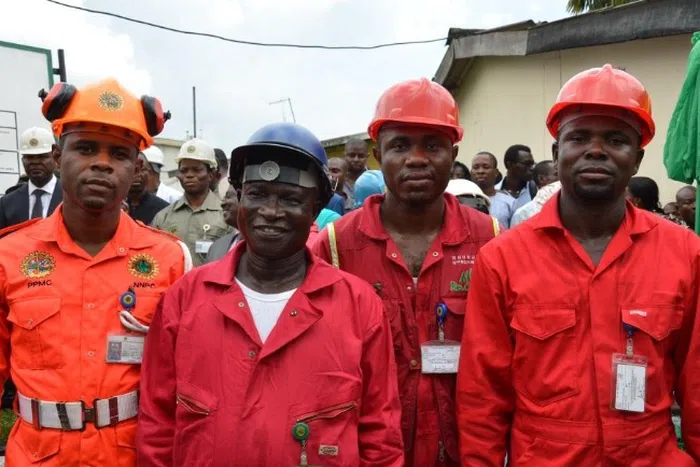

Workers at Seplat Energy began an indefinite strike on Friday, a move that could disrupt production at a time of rising global oil prices and mounting pressure on Nigeria to boost supply. The workers, under the aegis of the Petroleum and Natural Gas Senior Staff Association of Nigeria (PENGASSAN), embarked on the industrial action following a breakdown in negotiations over the 2026 collective bargaining agreement and broader welfare concerns.
The union communicated its grievances in two letters addressed to the company’s Chief Executive Officer, Reuters reported on Friday. The workers said the strike would continue “until further notice.” PENGASSAN indicated that its members would scale down operations, including production reporting and export activities, while maintaining only essential safety and power functions. The strike affects the company’s onshore and offshore assets, joint venture operations, and offices nationwide. Junior workers, represented by a different union, are not part of the action.
The industrial action comes despite the company’s strong operational performance in 2025. Seplat reported a 150.4 per cent increase in revenue to N4 trillion, driven by a significant expansion in output and its first full year of offshore operations. Average daily production rose by 148 per cent to 131,506 barrels of oil equivalent per day (boepd), representing roughly 7 to 9 per cent of Nigeria’s total liquids output. Onshore production also grew by 14 per cent, supported by upgrades to the Sapele Gas Plant, which increased processing capacity to 90 million standard cubic feet per day.
Despite the surge in revenue, profit growth remained constrained by rising costs, including substantial tax obligations. The company projects production to increase to 155,000 boepd, underscoring the potential impact of any prolonged disruption. Seplat’s CEO, Roger Brown, highlighted the company’s successful execution of offshore activities and strong onshore production performance, noting that drilling would remain central to the company’s long-term growth strategy, with plans to deploy its first jack-up drilling rig in the third quarter of the year.
From an economic perspective, the strike carries significant implications for Nigeria’s oil and gas sector. Seplat accounts for approximately 7 to 9 per cent of Nigeria’s total liquids output, meaning any sustained disruption could affect national production figures at a time when the government is seeking to maximise revenue from higher global oil prices. The ongoing geopolitical tensions in the Middle East have tightened global oil supply, creating an environment where every barrel counts. Nigeria’s ability to meet its OPEC quota and generate foreign exchange earnings depends on uninterrupted production from major operators like Seplat.
The strike also has implications for Nigeria’s power sector. Seplat is a major supplier of gas to power generation companies across the country. Any sustained disruption to its gas production could further strain electricity supply nationwide, affecting households and businesses already grappling with unreliable power. The manufacturing sector, which relies on consistent electricity or expensive self-generation, would be particularly affected by any reduction in gas supply to thermal power plants.
The dispute centres on negotiations for a new collective bargaining agreement and broader welfare concerns. While specific demands have not been publicly detailed, the timing of the strike reflects organised labour’s increasing willingness to use industrial action to press demands, even against profitable companies. The fact that the strike began without a formal response from Seplat Energy as of the time of reporting suggests that communication between the parties may have broken down, making resolution more difficult.
The strike also highlights the tension between company profitability and worker welfare. Seplat’s strong financial performance, including a 150 per cent revenue increase and the declaration of a fourth-quarter dividend of 5 cents per share and a special dividend of 3.3 cents, may have influenced worker expectations regarding compensation and benefits. When companies report record profits and project continued growth, workers often expect to share in that prosperity. If they perceive that management is prioritising shareholder returns over worker welfare, industrial action becomes more likely.
The company is dual listed in Lagos and London, and its CEO has stated that the firm is on track to deliver cumulative returns of $1 billion to shareholders by 2030. This shareholder focus may be at odds with worker demands for improved welfare packages, creating a classic labour capital tension. The resolution of the strike will depend on whether both parties can find common ground on compensation, working conditions, and the terms of the collective bargaining agreement.
For investors, the strike introduces uncertainty around Seplat’s production targets and financial performance. The company’s projection to increase production to 155,000 boepd assumes uninterrupted operations. Any prolonged disruption would affect not only production volumes but also the company’s ability to meet contractual obligations to gas buyers and crude oil offtakers. The strike also comes at a time when global oil prices are elevated due to Middle East tensions, meaning that each day of lost production represents foregone revenue at favourable pricing levels.
The government may be drawn into the dispute if the strike persists. The Minister of State for Petroleum Resources and the Nigerian Upstream Petroleum Regulatory Commission have roles in maintaining industrial harmony in the sector, given the strategic importance of oil and gas production to the national economy. Mediation efforts could be deployed to bring both parties back to the negotiating table and prevent a prolonged disruption that would harm both the company and the broader economy.