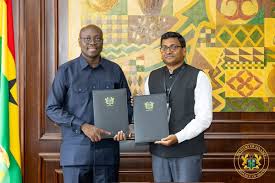

Ghana has signed its 11th bilateral debt restructuring agreement, this time with the Export-Import Bank of India, as part of sustained efforts to stabilise the economy and consolidate recovery momentum. Finance Minister Cassiel Ato Forson described the deal as a key milestone in the country’s broader debt restructuring programme, noting that it helps consolidate recent economic gains achieved under the International Monetary Fund-supported programme.
The agreement with EXIM India is aimed not only at easing immediate debt pressures but also at reshaping Ghana’s borrowing strategy to ensure long-term sustainability. Forson stated that Ghana is making steady progress toward lowering its debt distress risk, supported by improving macroeconomic indicators, including stabilisation of the cedi, easing inflation, and rebuilding of external buffers. Officials from the Indian export credit agency expressed confidence in Ghana’s recovery path, acknowledging the country’s economic challenges while highlighting progress made so far.
The deal forms part of Ghana’s wider push to restore fiscal stability, rebuild investor confidence, and avoid a return to unsustainable debt levels. Since defaulting on most of its external debt in 2022, Ghana has pursued a comprehensive restructuring encompassing bilateral creditors, commercial bondholders, and multilateral obligations. The bilateral restructuring track, coordinated under the G20 Common Framework, has been central to this effort, with the EXIM India agreement representing the latest in a series of bilateral deals.
From a regional perspective, Ghana’s debt restructuring experience offers lessons for other African countries navigating similar challenges. The combination of IMF engagement, coordinated creditor negotiations, and sustained policy reform has helped Ghana stabilise its economy while maintaining access to essential imports and social spending. However, the process has also highlighted the complexity of coordinating across diverse creditor groups with varying interests and timelines.
For investors, the conclusion of bilateral restructuring agreements reduces uncertainty around Ghana’s external obligations, potentially supporting portfolio flows and private sector confidence. The government has emphasised that the restructuring is designed not merely to achieve debt relief but to create conditions for sustainable growth, including through increased investment in infrastructure, agriculture, and energy.
Looking ahead, Ghana’s economic trajectory will depend on maintaining policy discipline, ensuring timely implementation of structural reforms, and navigating global economic conditions. The successful conclusion of bilateral restructuring agreements provides a foundation, but sustaining recovery will require continued focus on revenue mobilisation, expenditure management, and efforts to improve the business environment.