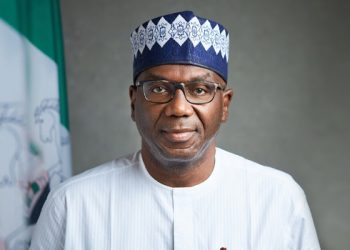
The Chartered Institute of Bankers of Nigeria (CIBN) has elected Dr Dele Alabi, the institute’s immediate past First Vice President, as its new President, tasking him with steering the banking profession through an evolving financial landscape marked by rapid technological change, regulatory shifts, and increasing complexity. Alabi was elected during the institute’s hybrid Annual General Meeting and election in Lagos, alongside Dr Haruna Musa, Managing Director of Jaiz Bank, who emerged as National Treasurer. The event drew the participation of 16 bank managing directors, including Oliver Alawuba of United Bank for Africa and Dr Adaora Umeoji of Zenith Bank, underscoring the significance of the leadership transition for the banking industry.
Alabi, in his acceptance speech, described his election as a collective mandate and reaffirmed his commitment to advancing the banking profession as a catalyst for national transformation. “This moment is not mine alone. It is a shared glory and a collective affirmation of our enduring commitment to excellence, integrity and the noble calling of banking,” he said, adding that he accepted the mandate as a responsibility to be fulfilled with diligence and accountability. He paid tribute to the outgoing President, Prof. Pius Olanrewaju, for laying a solid foundation for growth through visionary leadership and strengthening the institute’s financial performance and institutional development over the last two years.
The new president outlined a vision of a more dynamic and globally respected institute that will shape Nigeria’s banking industry and attract relevance across international borders. He emphasised that the institute must position itself to lead in an evolving financial landscape, stating, “We are expected not merely to adapt, but to lead. We must become architects of innovation, custodians of ethical standards and champions of professionalism in the industry.” His administration, he assured members, would prioritise integrity, inclusiveness, and the overall interest of the profession. His investiture ceremony is scheduled for May 16 in Lagos, where he is expected to unveil his full agenda.
The election comes at a pivotal moment for Nigeria’s banking sector. The industry has recently completed a major recapitalisation exercise that strengthened balance sheets and enhanced the sector’s capacity to underwrite large-scale infrastructure and industrial projects. Simultaneously, the Central Bank of Nigeria has tightened regulatory oversight, restricting banking services for chronic loan defaulters and moving toward orthodox monetary policy focused on price stability. The CIBN, as the professional body for bankers, plays a critical role in ensuring that the human capital underpinning the sector maintains the ethical standards and technical competence required to navigate these changes.
Outgoing President Prof. Pius Olanrewaju reported significant achievements during his tenure, including growth in the institute’s internally generated revenue, an increase in membership by nearly 7,000, and the remodelling of the CIBN headquarters. Digital capacity was improved, enabling approximately 20,000 members to participate in programmes virtually. The institute also introduced more frequent examinations and a proctored system allowing candidates to write exams globally. Olanrewaju noted that initial resistance to reforms was overcome through teamwork and expressed confidence that the incoming leadership would sustain the progress.
Dr Haruna Musa, the newly elected National Treasurer, pledged prudent stewardship and affirmed his commitment to professionalism, integrity, and excellence. He promised to work with the institute’s leadership to strengthen its operations and advance the banking profession. Dr Mojisola Asieru-Sweet was elected First Vice President, Dr Peter Ashade as Second Vice President, while Abosede Ogundimu, Obafemi Omolola, Mary Akpenyi, and Adesina Joda were elected as members of the Governing Council.
From a broader economic perspective, the CIBN’s leadership transition carries significance beyond the banking profession. A well-governed, professionally competent banking sector is essential for financial stability, efficient capital allocation, and the transmission of monetary policy. As Nigeria pursues economic diversification and seeks to attract investment, the credibility of its financial intermediaries becomes a factor in investment decisions. The institute’s focus on ethical standards, innovation, and global relevance aligns with the broader objectives of strengthening Nigeria’s financial architecture.