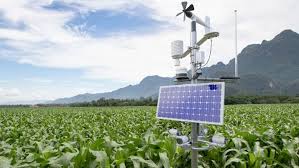

Agriculture and water sector stakeholders have called for accelerated adoption of solar-powered irrigation systems to enhance food production and strengthen Nigeria’s food security.
The call was made during a workshop titled “Scaling Climate-Resilient Irrigation: Partnership Alignment, Coordinated Pathways and Learning in Nigeria” held in Abuja on Tuesday.
The event was organised by the International Water Management Institute (IWMI) and the International Food Policy Research Institute (IFPRI), in collaboration with the CGIAR.
Speaking at the workshop, Adebayo Oke, Senior Regional Researcher at IWMI, said the initiative aims to reduce irrigation costs by leveraging Nigeria’s abundant solar energy.
“Given the high fuel prices and abundant solar energy in Nigeria, there is a huge opportunity to power smallholder irrigation sustainably,” he said.
Oke identified access to financing as a major barrier to adoption, despite growing interest among farmers.
“Many technologies exist, and farmers are interested, but initial costs can be a barrier. That is why financial institutions, banks, and risk-mitigating agencies such as NIRSAL must play a key role in supporting farmers to adopt these systems,” he added.
He also stressed the need for technical training to ensure farmers can effectively utilise solar irrigation systems, noting that capacity building is critical for long-term sustainability.
Officials highlighted the importance of collaboration among government agencies, private sector players, and development partners to scale climate-resilient agricultural solutions.
Esther Oluniyi, Director of Irrigation and Drainage at the Federal Ministry of Water Resources and Sanitation, said rising diesel and petrol costs have made solar-powered irrigation a viable alternative.
“High diesel and petrol costs have made solar-powered systems a viable alternative. Through this partnership, farmers will benefit from reliable and affordable irrigation solutions,” she said.
Oluniyi added that ongoing partnerships aim to expand access to clean water for agriculture and improve resilience against climate challenges such as floods and droughts.
Also speaking, Olawumi Ayodele of the Federal Ministry of Agriculture and Food Security said the government is prioritising irrigation expansion under the current administration’s development agenda.
He disclosed that pilot programmes would be implemented in four states to demonstrate improved irrigation practices, adding that climate-resilient systems could significantly boost yields and support farmers’ livelihoods.
Ayodele noted that farmer-led approaches promoted by IWMI and IFPRI are designed to encourage direct adoption of technologies, ensuring practical impact at the grassroots level.
The workshop brought together policymakers, farmers, financial institutions, development partners, and technology providers to align strategies for scaling irrigation solutions.
The initiative forms part of the Scaling for Impact (S4I) programme for 2026–2028, aimed at advancing sustainable agricultural development in Nigeria.