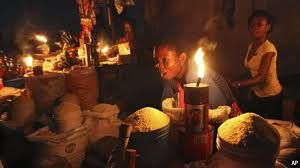

Residents of Makurdi, the Benue State capital, have voiced intense frustration over a persistent power crisis and skyrocketing charges by the Jos Electricity Distribution Company (JEDC). Speaking with the News Agency of Nigeria (NAN) on Tuesday, March 24, 2026, inhabitants described a harrowing environment where acute blackouts have coincided with a severe regional heatwave, making daily life and business operations nearly unsustainable.
The structural and economic consequence of this failure is a complete breakdown in domestic and commercial logistics. Residents like Mrs. Dorathy Kumachivir reported an inability to preserve food, while small business owners, including food vendor Ms. Jessica Ivarave, have been forced to abandon refrigeration entirely. In areas like North Bank, the crisis has evolved into a secondary water shortage, as the lack of electricity has paralyzed the boreholes that serve as the community’s primary water source. For many, “power supply” has dwindled to less than 20 minutes in a 24-hour cycle.
Analytically, the impact on “Infrastructure Longevity and Maintenance” is most evident in the Tse Adi settlement, which has been without electricity for over a year following a transformer failure in 2024. Despite formal petitions to relevant authorities, residents like Mrs. Eunice Terdoo claim no remedial action has been taken. JEDC’s Head of Corporate Services, Dr. Adakole Elijah, defended the company’s performance by citing a significant drop in energy allocations from the Transmission Company of Nigeria (TCN), stating that current supply levels are simply insufficient to meet Makurdi’s aggregate demand.
The impact on “Grid Management and Geographic Vulnerability” is particularly acute in Makurdi North. Dr. Elijah explained that the distribution lines passing beneath the River Benue Bridge are plagued by recurring technical faults. As a temporary fix, JEDC has implemented a “rationing formula” based on the band system, where Band A customers receive priority. However, the company revealed that the Federal Government is currently considering a structural redesign to reroute these lines over the bridge to ensure greater safety and reliability.
Furthermore, the disconnect between “high charges” and “zero supply” has fueled a sense of injustice among the populace. Residents argue that being billed for energy they do not receive—often during late-night hours when it cannot be utilized is a predatory practice. JEDC maintains that it cannot distribute “more than what it has,” but for the “common man” in Makurdi, this explanation offers little relief from the twin pressures of financial strain and physical discomfort.
The long-term outlook for Makurdi’s power stability depends on the successful rerouting of the River Benue lines and a stabilized allocation from the national grid. Until these high-level technical issues are resolved, the capital remains a city of “rationed light,” where the disparity between Band A and other consumers continues to widen. For now, the people of Benue remain in a state of watchful waiting, hoping that government intervention will finally bridge the gap between their payments and their power.