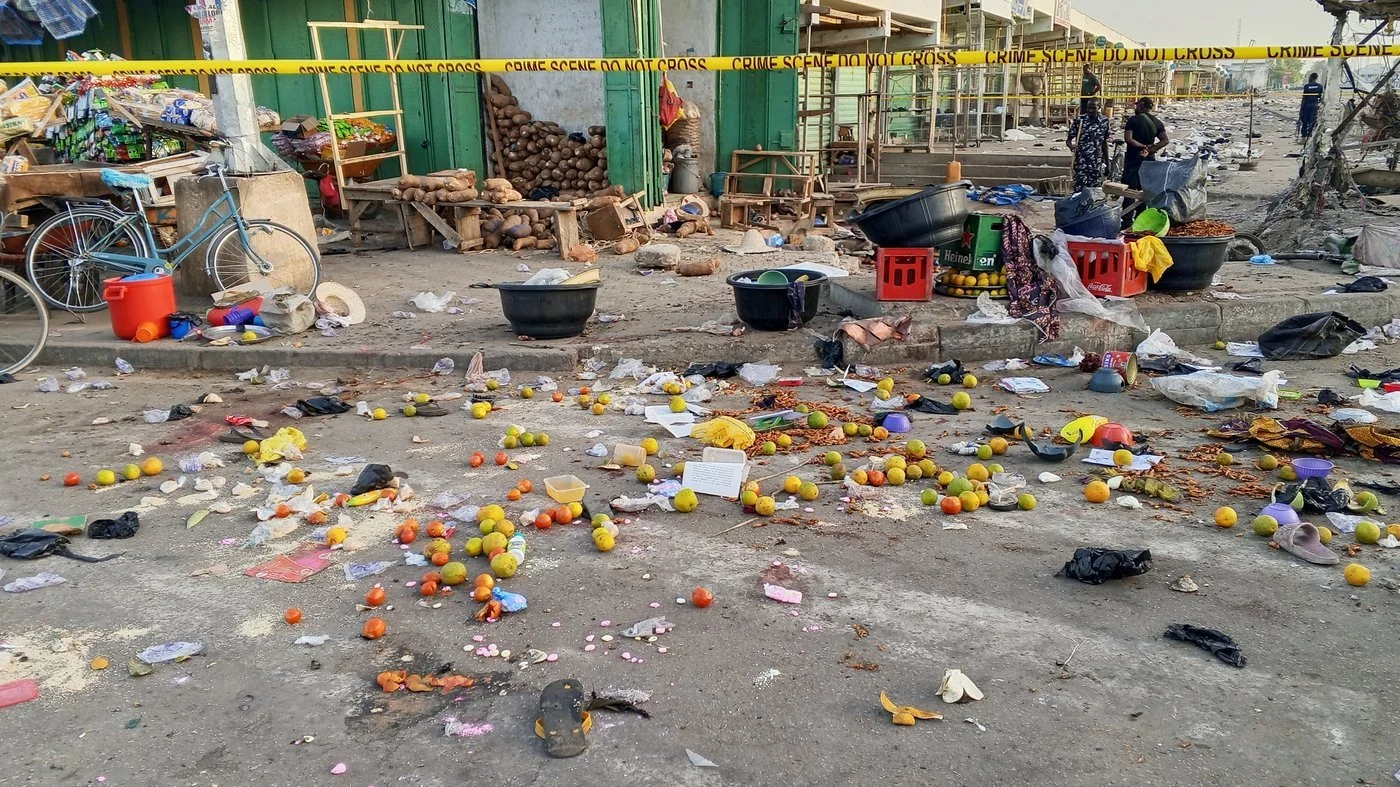

The economic recovery of northeastern Nigeria faced a severe setback on Monday night as coordinated explosions tore through the strategic heart of Maiduguri, Borno State. Targeting the Monday Market, the Post Office area, and the entrance to the University of Maiduguri Teaching Hospital, the attacks have struck the city’s most critical infrastructure for commerce and human capital.
National Emergency Management Agency officials confirmed high casualty counts, with eyewitnesses reporting over 200 injured individuals flooding emergency wards. For a region that has spent years attempting to transition from a humanitarian crisis to a sustainable trade economy, these blasts represent a direct assault on the physical and financial stability of the state capital.
The Monday Market and the Post Office district serve as the primary engines of micro-economic activity in Maiduguri, facilitating the exchange of agricultural goods and retail services for millions of residents. By targeting these specific locations, the perpetrators have effectively frozen local trade and discouraged the private sector investment that had slowly begun to return to the city.
Beyond the immediate destruction of stalls and inventory, the psychological impact on the civilian population is expected to trigger a contraction in evening economic activity, which is vital for the informal sector. As business owners assess the damage, the secondary cost of the incident will likely manifest in reduced market attendance and a heightened risk premium for logistics and transport within the Lake Chad Basin.
Strain on Healthcare Infrastructure and Human Capital
The blast at the University of Maiduguri Teaching Hospital (UMTH) has unique and devastating economic implications. As the premier tertiary health facility in the region, UMTH is a cornerstone of the state’s healthcare infrastructure. Targeting its entrance during a mass casualty event creates a logistical bottleneck that hampers the productivity of medical professionals and threatens the long-term health of the labor force.
Volunteers have reported a critical shortage of blood supplies and medical resources, highlighting the fragility of the city’s emergency response systems under duress. When healthcare infrastructure is compromised, the cost of labor rises and the overall quality of life for the civilian population diminishes, further complicating the government’s efforts to achieve regional economic stabilization.
Fiscal Implications for State Reconstruction and Security Spending
Governor Babagana Umara Zulum has condemned the acts as barbaric, but the fiscal reality for the Borno State government is now one of redirected priorities. Funds that were earmarked for infrastructure development, education, and the ongoing repatriation of displaced persons may now need to be diverted toward emergency medical bills, market reconstruction, and intensified security surveillance.
For the business community, the return of volatility to Maiduguri’s urban core may delay planned expansion projects and increase insurance premiums for commercial properties. The government’s ability to restore normalcy and secure these vital economic zones will be the determining factor in whether the city can maintain its trajectory toward being a viable commercial hub in the Sahel.