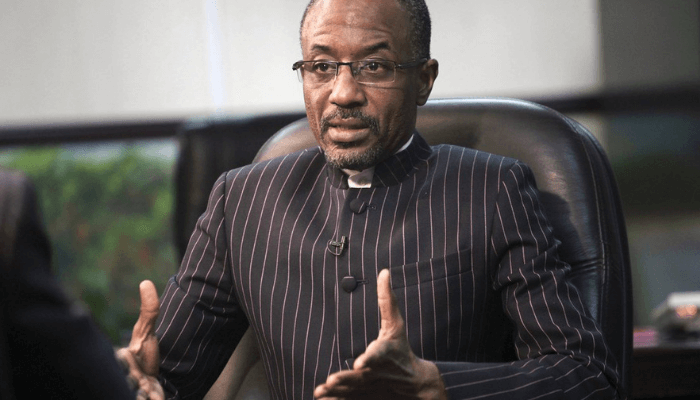

The Emir of Kano, Muhammadu Sanusi II, has identified Nigeria’s persistent electricity shortage as the country’s most significant barrier to industrialisation, warning that decades of inadequate power supply continue to undermine economic growth, increase business costs and deepen poverty.
Speaking at the 70th birthday symposium of former Minister of Power and Chairman of Geometric Power Group, Prof. Barth Nnaji, held at the International Conference Centre in Enugu, Sanusi said no nation has achieved sustainable industrial development without reliable, affordable and secure electricity.
Describing energy security as the foundation of economic prosperity, the former Governor of the Central Bank of Nigeria (CBN) said dependable power supply drives manufacturing, boosts productivity, supports job creation and improves living standards.
“Energy security and national development are inextricably linked. A reliable, affordable and sustainable energy supply is the foundational driver of economic growth, industrialisation and poverty reduction,” Sanusi said.
He noted that unreliable electricity has forced thousands of Nigerian businesses and households to rely on diesel and petrol generators, significantly increasing operating costs, reducing competitiveness and contributing to inflationary pressures across the economy.
Drawing on international evidence, Sanusi said stable electricity supply supports macroeconomic stability, while frequent power disruptions weaken industrial output, discourage investment and slow economic expansion. He added that sectors such as healthcare, education, transportation and information technology also depend on reliable electricity to function efficiently.
The Emir identified six major constraints limiting the growth of Nigeria’s electricity industry: chronic underinvestment, vandalism of power infrastructure, corruption, liquidity challenges across the value chain, regulatory uncertainty and the absence of cost-reflective electricity tariffs capable of attracting long-term private capital.
He also highlighted the country’s weak transmission and distribution infrastructure, noting that limited network capacity, recurring grid failures and high technical and commercial losses continue to prevent available electricity from reaching consumers efficiently.
According to Sanusi, Nigeria faces an estimated $100 billion power infrastructure funding gap, underscoring the scale of investment required to modernise the sector and meet growing electricity demand.
Looking ahead, he urged policymakers to accelerate reforms by leveraging Nigeria’s abundant natural gas reserves while expanding investment in renewable energy sources such as solar and wind. Such a diversified energy mix, he argued, would strengthen energy security and better position the country for the global transition towards cleaner technologies.
Sanusi cited Geometric Power’s operations in Abia State as a practical example of how reliable electricity can stimulate industrial activity, attract investment and transform local economies. He also recalled that Prof. Nnaji had raised concerns during Nigeria’s power sector privatisation about the financial capacity of some electricity distribution companies, stressing that those concerns remain relevant as the industry seeks sustainable growth.
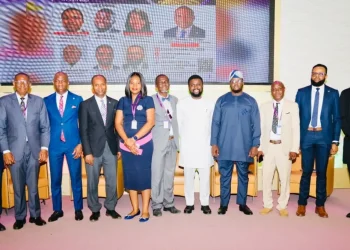
The symposium attracted leading policymakers and industry stakeholders, including former President Olusegun Obasanjo, Enugu State Governor Peter Mbah, Abia State Governor Alex Otti and representatives of Vice President Kashim Shettima, reflecting renewed attention on electricity reform as a critical driver of Nigeria’s economic transformation.