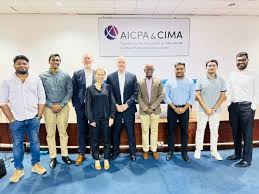

The Chartered Institute of Management Accountants (CIMA) has emphasized that Nigeria’s burgeoning youth population must be equipped with essential finance and business skills to drive the nation’s economic transformation. In a statement issued on Thursday, February 19, 2026, the world’s leading body of management accountants highlighted that bridging the skills gap is critical for converting the challenges of a large workforce into sustainable opportunities for growth.
The economic and social consequence of this skills deficit is a missed opportunity for Nigeria to leverage its “demographic dividend.” With unprecedented numbers of young people entering the labor market, CIMA warns that traditional academic education alone is no longer sufficient. By mastering finance, strategy, and technology, Nigerian youths can move beyond basic employment to becoming resilient professionals who can guide strategic decision-making and create long-term value in both the public and private sectors.
Analytically, the path to this transformation lies in professional qualifications that simulate real-world business scenarios. Stephen Flatman, Vice President of Education at CIMA, noted that the Chartered Global Management Accountant (CGMA) qualification offers a three-tier pathway Operational, Management, and Strategic designed to build leadership and technical proficiency. This “future-focused” curriculum covers vital areas such as risk management, digital strategy, and sustainability, ensuring that young Nigerians are not just job seekers but “future-ready” leaders capable of navigating a digital-first global economy.
The impact on “Employability and Global Competitiveness” is a vital dimension of CIMA’s advocacy. As modern employers increasingly prioritize competencies in data analytics and strategic leadership, those with professional certifications gain access to over 170 international job markets. CIMA’s commitment to Nigeria is further evidenced by its ongoing partnerships with local universities, such as Thomas Adewumi University and Landmark University, which allow students to earn global designations alongside their degrees. This integration of professional and academic learning is intended to reduce youth unemployment and enhance the credibility of Nigeria’s financial services sector.
Furthermore, the institute’s focus on Digital Finance addresses the rapid pace of technological change in the accounting profession. CIMA’s updated competency framework now incorporates digital skills as a core pillar, alongside technical and leadership abilities. For young Nigerians, this means developing the “wisdom and expertise” to tackle emerging societal issues like climate change and cyber-security while ensuring business innovations remain sustainable and inclusive.
The long-term economic outlook for Nigeria hinges on its ability to formalize and professionalize its young workforce. As CIMA continues to award certificates to hundreds of new Nigerian professionals annually, the goal is to build a critical mass of commercially astute individuals who can stabilize the economy against external shocks. For now, the call to action for the youth is clear: the future belongs to those who complement their ambition with a globally recognized professional mindset.