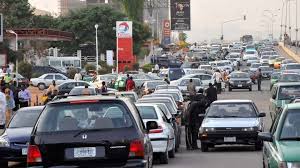

Lagos motorists and commuters are grappling with a sharp spike in transportation costs as the retail price of Premium Motor Spirit (PMS) surged to between N1,250 and N1,350 per litre this weekend. A market survey conducted by the News Agency of Nigeria (NAN) on Sunday, March 15, 2026, reveals widespread concern as the downstream sector reacts to a rapid succession of price hikes originating from the Dangote Petroleum Refinery which increased its gantry price by 18.1% in just three days, rising from N995 to N1,175 per litre. These domestic adjustments are a direct consequence of volatile global energy trends, including Brent crude approaching $99 per barrel and the Naira trading at approximately N1,650 to the dollar.
The structural and logistical consequence of this price hike is largely tied to escalating geopolitical tensions in the Middle East. Standoffs involving Israel, Iran, and Houthi-linked activity in the Red Sea have forced tankers to utilize longer, more expensive shipping routes. This has resulted in a nearly 40% increase in global freight costs, directly impacting the feedstock and logistics expenses for local refineries and importers alike. Consequently, major retail outlets such as Mobil, MRS, and Ardova Plc have adjusted their pumps upward, with some locations in Iyana Ipaja and Alimosho reaching the N1,350 mark.
Analytically, the impact on the local economy is immediate and severe. Commuter fares across Lagos have jumped by more than 30%, placing an immense burden on residents and commercial drivers. Drivers report that the high cost of operations makes fare hikes unavoidable, while many motorists face the additional stress of shuttered stations and long queues. Dr. Muda Yusuf, CEO of the Centre for the Promotion of Private Enterprise (CPPE), warned that these energy costs will inevitably bleed into manufacturing and food prices, as logistics and power generation become increasingly expensive for businesses.
The long-term outlook for Nigeria remains precarious despite its status as an oil producer. Because national crude production is currently fluctuating between 1.4 million and 1.6 million barrels per day, the country is unable to fully capitalize on high global oil prices to build fiscal buffers. The CPPE suggests that the only sustainable path forward involves a combination of intensified domestic refining, foreign exchange stability, and targeted support for vulnerable citizens to mitigate the inflationary pressure of the global energy crisis.