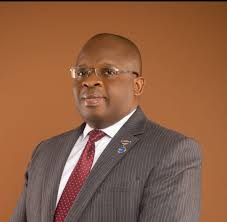

The Cross River Internal Revenue Service (CRIRS) has set an ambitious target to generate over N60 billion in internally generated revenue (IGR) for the 2026 fiscal year. This projection, announced by the Executive Chairman, Mr. Edwin Okon, on Thursday, March 12, 2026, is anchored on the strategic implementation of the new National Tax Act, which was signed into law in June 2025. During a two-day strategy workshop in Calabar titled “Growing Cross River Revenue: Building Investor’s Confidence And Leveraging Gains of the New Tax Law,” Okon emphasized that 2026 represents the first full year of the law’s operational cycle.
The structural and economic consequence of this target marks a significant leap from previous years. The state’s IGR has seen a dramatic trajectory, rising from approximately N20 billion in 2022 to nearly N60 billion by the end of 2025. This growth is largely attributed to the reforms initiated by the Governor Bassey Otu administration, which prioritized the automation of collection processes and the elimination of manual loopholes. The CRIRS is now aiming for a monthly revenue benchmark of N10 billion as these digital and administrative reforms continue to take root across the state’s financial architecture.
Analytically, the service is currently conducting a comprehensive review to navigate the transition into the new tax regime. Okon noted that the agency is identifying areas where traditional revenue streams might decline under the new law, while simultaneously exploring fresh provisions to expand the tax base. A critical component of this transition is the deployment of 196 ward representatives who have been trained across the three senatorial districts. These representatives are tasked with grassroots sensitization, ensuring that market groups, residents, and community leaders fully understand their obligations under the revised legal framework.
The impact on “Investor Confidence and Development Planning” was a key theme echoed by Mr. Bong Duke, Chief Executive Officer of the Cross River Planning Commission. Duke asserted that a predictable and transparent tax system is a prerequisite for improving the ease of doing business. By positioning tax administration as a partnership between the government and the private sector, the state aims to build a sustainable funding model for infrastructure and economic development. This collaborative approach is intended to reassure investors that revenue collection is handled professionally and used effectively for state growth.
Furthermore, the workshop served as a post-mortem for the 2025 performance, allowing officials to fine-tune their approaches for the 2026 rollout. The agency’s focus remains on balancing aggressive revenue growth with the need to maintain a business-friendly environment. By leveraging the new National Tax Act, Cross River State seeks to reduce its dependence on federal allocations and establish a robust, self-sustaining economy driven by efficient domestic resource mobilization.
The long-term outlook for Cross River’s fiscal health depends on the successful integration of these national reforms at the local level. As the state moves toward a more automated and transparent system, the challenge will be to maintain the current momentum of growth without overburdening the private sector. If the CRIRS successfully meets its N10 billion monthly target, it will provide the Governor Otu administration with the fiscal space needed to deliver on its promises of massive infrastructural renewal and social welfare.