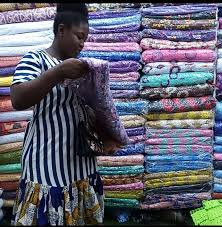

Traders across major commercial hubs in Bauchi State have reported a significant decline in patronage as the Ramadan season approaches its conclusion. Despite a notable stabilization in the prices of fabrics and finished raiment, market participants indicate that the high cost of living and diminished disposable income among residents have stifled the traditional festive spending surge. The situation highlights a broader trend within the Nigerian retail sector, where inflationary pressures on essential commodities like food and fuel are crowding out discretionary spending on textiles and apparel.
In a series of market surveys conducted on Wednesday in Bauchi, various stakeholders expressed concern that the usual peak period for the clothing trade has failed to materialize. At the popular Wunti Market, traders noted that while the inventory for the season is sufficient, the volume of transactions remains well below historical averages for the pre-Eid-el-Fitr period. This subdued commercial activity reflects the ongoing challenges within the Nigerian macroeconomy, characterized by a weakened purchasing power that has forced many households to prioritize caloric intake over seasonal celebrations.
Malam Umar Usman, a prominent textile dealer at Wunti Market, explained the current pricing dynamics affecting the trade. He noted that while “new arrivals” of premium materials such as high-grade brocade and intricate wrappers have entered the market at slightly higher price points due to logistics and supply chain costs, the overall price index for clothing has not seen the astronomical spikes typical of previous festive seasons. Usman described the marginal increase in the cost of new stock as a standard market adjustment, yet he emphasized that even stable pricing has not been enough to entice a cash-strapped citizenry.
The stability of the textile market was further corroborated by Hajiya Shafa Abubakar, a specialist in women’s ethnic wear. According to Abubakar, the retail price of certain wrappers currently fluctuates between ₦13,000 and ₦14,000, which is largely consistent with, or even slightly lower than, prices recorded in the preceding month. Despite this lack of significant inflation in the apparel sub-sector, she lamented that patronage remains “discouraging.” Abubakar pointed out that during the same period last year, market turnover was considerably higher, suggesting that the cumulative effect of national economic reforms has reached a point where the informal retail economy is experiencing a palpable contraction.
From an analytical perspective, the situation in Bauchi serves as a localized case study of the “income effect” in economics. With Nigeria’s headline inflation remaining elevated, the real value of the Naira in the pockets of average consumers has eroded. Consequently, the demand for “superior goods” or non-essential items like new festive clothing has become highly elastic. Customers who spoke to the News Agency of Nigeria (NAN) echoed this sentiment, noting that while the quality and pricing of the clothes are fair, the lack of liquidity is the primary barrier to purchase. Sani Musa, a resident and shopper, observed that the volatility of the foreign exchange market continues to cast a long shadow over domestic prices, as much of the textile stock in Northern Nigeria is either imported or produced using imported dyes and machinery.
The impact of this low patronage extends beyond the immediate loss of revenue for traders; it also affects the auxiliary value chain, including tailors, logistics providers, and seasonal laborers who depend on the Ramadan rush for their livelihoods. If the trend persists through the Eid holidays, it could lead to an inventory glut for many small and medium-scale enterprises (SMEs), potentially causing a credit crunch for traders who took out short-term loans to stock up for the season. The textile and garment industry is a vital component of the informal economy in Northern Nigeria, and its current stagnation signals a need for broader interventions to stimulate consumer demand and stabilize the naira.
As the federal and state governments continue to implement various social intervention programs and wage awards, the retail sector remains hopeful for a late-season recovery. However, economists suggest that until there is a significant cooling of food and energy inflation, the “clothing and footwear” component of the Consumer Price Index (CPI) will continue to face headwinds. The current market reality in Bauchi underscores the urgency of achieving macroeconomic stability to ensure that the benefits of stable pricing can be realized by both the merchant class and the general public.
In the final days leading up to the festivities, many traders are adjusting their expectations, shifting focus toward lower-margin goods to clear old stock. While the hope remains for a last-minute influx of buyers, the prevailing economic sentiment suggests that this year’s celebrations will be characterized by a more modest approach to consumption. The long-term recovery of the Bauchi retail markets will ultimately depend on the broader trajectory of the Nigerian economy and the restoration of consumer confidence through improved fiscal and monetary outcomes.