


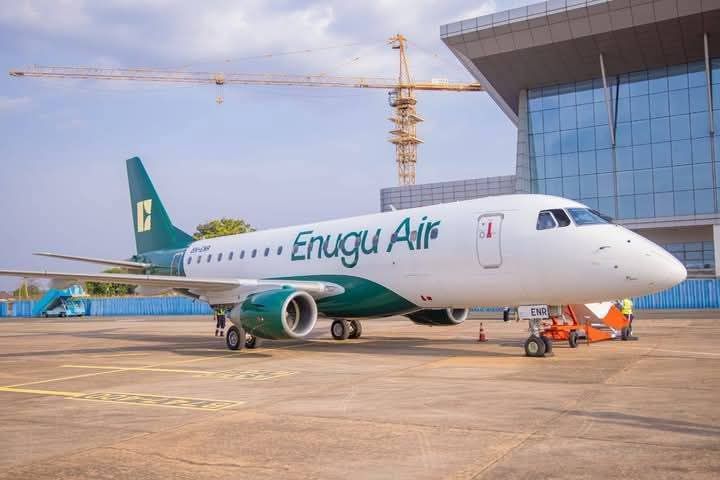

The Nigeria Civil Aviation Authority has issued an Air Operator Certificate to Enugu Air, clearing the state-owned carrier to begin scheduled commercial flight operations and positioning the South-East region for enhanced economic connectivity. The certificate was presented on Tuesday at the regulator’s headquarters in Abuja by the Director General of Civil Aviation, Chris Najomo, following a detailed regulatory process involving operational inspections and technical assessments.
An Air Operator Certificate authorises an airline to conduct commercial air transport operations after meeting regulatory requirements covering safety, operational capability and technical compliance. Najomo commended the airline’s management and the authority’s technical team for completing the certification process, noting that the regulator has continued to strengthen its procedures to ensure airlines meet required standards before commencing operations.
Strategic Economic Implications
For the South-East economy, the establishment of Enugu Air carries significant potential. The region, despite its substantial contributions to Nigeria’s commerce and industry, has long suffered from inadequate air connectivity that constrains business travel, investment flows, and tourism development. Enugu’s Akanu Ibiam International Airport, from which the airline will operate, serves as the primary aviation gateway for the five South-Eastern states, but limited flight options have historically forced travellers to route through Lagos or Abuja, adding time and cost to journeys.
The airline plans to connect Enugu with major domestic destinations including Lagos, Abuja, Port Harcourt and Owerri, creating direct linkages that reduce travel friction for business travellers. For manufacturers, traders, and professionals operating across the region, improved air connectivity translates into time savings, reduced transaction costs, and enhanced ability to maintain client relationships and supply chains.
Enugu State Commissioner for Transportation, Obi Ozor, said the airline was established specifically to improve air connectivity within the South-East and support economic activities in the region. He noted that improved air links could facilitate business travel and boost tourism and investment opportunities. This vision aligns with broader efforts to position the South-East as a competitive investment destination, leveraging its entrepreneurial population and industrial base.
Operational Scale and Growth Plans
The airline currently has a fleet of six aircraft, including the Embraer E170 and Embraer E190 regional jets, equipment well suited for domestic operations with appropriate capacity for Nigerian routes. Officials said the airline plans to expand its fleet to approximately 20 aircraft by the end of 2026 as it scales operations within Nigeria’s domestic aviation market.
This expansion trajectory, if realised, would represent significant growth in Nigeria’s aviation sector, creating employment for pilots, cabin crew, engineers, and ground staff. Each aircraft added to the fleet generates multiple direct jobs and supports additional employment in maintenance, catering, and airport services. The multiplier effects extend through the economy as aviation workers spend their incomes on housing, transportation, and consumer goods.
The fleet composition also matters for operational economics. Regional jets like the Embraer series offer fuel efficiency and range appropriate for Nigerian domestic routes, potentially enabling competitive pricing while maintaining service quality. For business travellers, reliable regional jet service provides a superior experience to smaller turboprop aircraft, potentially attracting passengers who might otherwise drive or use alternative transport.
Regulatory Confidence and Industry Development
The certification by NCAA reflects confidence in Enugu Air’s operational preparedness and commitment to safety standards. Speaking during the presentation, Najomo emphasised that the regulator has worked to strengthen certification procedures, ensuring that new entrants meet rigorous requirements before taking to the skies.
The airline’s accountable manager, Tolu Ita, confirmed that the carrier worked closely with the regulator throughout the certification process and would operate in compliance with aviation safety standards. This commitment is essential for building passenger confidence and sustaining operations in a competitive market where safety records influence consumer choice.
Chairman of the Enugu Air Board, Richard Agu, assured the regulator that the airline would maintain compliance with aviation regulations as operations begin. This governance oversight, with a board providing strategic direction and accountability, suggests a commitment to professional management that can sustain the airline beyond initial launch.
Regional Connectivity and Development
The South-East has long sought improved air links to support its economic aspirations. The region is home to significant industrial activity, particularly in Nnewi and Aba, where manufacturing and commerce generate substantial travel demand. Businesspeople currently face limited flight options, often requiring overnight stays in Lagos or Abuja to connect to onward flights. Direct services from Enugu to major destinations reduce this friction, potentially increasing business efficiency and encouraging investment.
The tourism potential is also significant. Enugu’s proximity to tourist attractions in the South-East, including the Nike Lake Resort, the Obudu Cattle Ranch, and various cultural sites, could attract visitors who currently find access challenging. Improved air connectivity positions the region to capture a larger share of Nigeria’s domestic tourism market, generating economic activity for hotels, restaurants, and tour operators.
Broader Aviation Market Impact
Enugu Air’s entry into the domestic market increases competition on routes serving the South-East, potentially benefiting consumers through improved service and competitive pricing. Existing carriers operating on these routes will face pressure to maintain quality and efficiency, raising standards across the industry.
The airline’s state ownership structure, however, raises questions about long-term sustainability. Government-owned airlines globally have faced challenges maintaining commercial discipline, often requiring subsidies that drain public finances. Enugu Air’s success will depend on its ability to operate commercially, covering costs through passenger revenue rather than relying on state support.
The fleet expansion target of 20 aircraft by year end is ambitious given the current fleet of six. Achieving this scale will require substantial capital investment, effective route development, and the ability to capture market share from established competitors. The airline’s management will need to balance growth ambitions with operational prudence, ensuring that expansion does not compromise safety or service quality.
For Nigeria’s economy, a successful Enugu Air would demonstrate that state governments can participate productively in commercial aviation, improving connectivity and supporting regional development. For the South-East, the airline offers the prospect of finally achieving the air access that its economic weight deserves.


