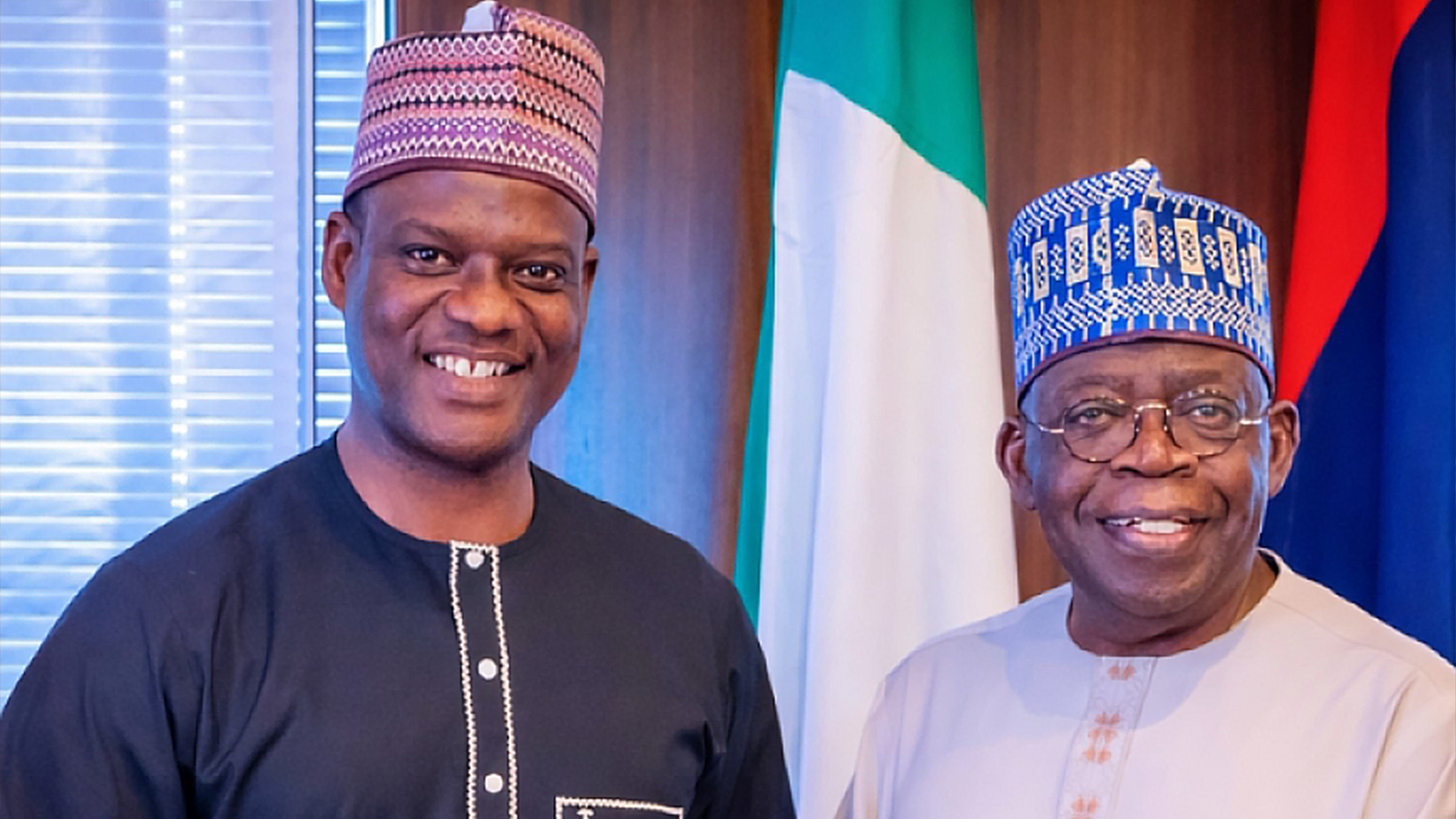

President Bola Tinubu has formally asked the Senate to screen and confirm Taiwo Oyedele as the Minister of State for Finance and Senator Magnus Abe as the Chairman of the Nigerian Upstream Petroleum Regulatory Commission (NUPRC). In separate letters read by Senate President Godswill Akpabio during Tuesday’s plenary session, the President initiated the legislative process to integrate these key appointments into his administration’s economic and energy leadership teams.
The move marks a pivotal transition for Oyedele, who has spent the last year leading the Presidential Committee on Fiscal Policy and Tax Reforms. If confirmed, he will replace Dr. Doris Uzoka-Anite, who is set to transition to the Ministry of Budget and National Planning.
From Policy Architect to Executive Implementation
The request for Oyedele’s confirmation is seen as a strategic step toward the actualization of the “Nigeria Tax Reform Acts” which he presented to the President in late 2025. Economists suggest that moving Oyedele from a committee role into a ministerial position signals the government’s commitment to a more aggressive and technical approach to fiscal management.
Oyedele’s primary economic mandate will likely involve narrowing the fiscal deficit by improving tax compliance and eliminating the multiple taxation bottlenecks that have historically hampered Nigeria’s GDP growth. His expertise is expected to provide the technical backbone for the Ministry of Finance as it navigates a complex inflationary environment and seeks to stabilize the Naira through more robust revenue streams.
Institutionalising Predictability for Private Investors
For the business community, the Senate’s expected confirmation of Taiwo Oyedele—a former Fiscal Policy Partner and Africa Tax Leader at PwC offers a rare level of institutional predictability. The corporate sector has long advocated for a tax system that is both transparent and simplified; having the architect of the new tax laws at the ministerial helm is viewed as a “business-friendly” signal to both domestic and foreign direct investors.
Similarly, the nomination of Senator Magnus Abe to lead the NUPRC addresses a critical vacancy in the oil and gas sector following the resignation of Gbenga Komolafe. For stakeholders in the upstream sector, Abe’s confirmation is essential for regulatory continuity. Businesses operating in Nigeria’s oil fields require a steady hand at the NUPRC to manage licensing rounds and ensure that the Petroleum Industry Act (PIA) continues to offer a competitive framework for global energy capital.
Strengthening Regulatory Oversight with Technical Commissioners
The President’s request also included the nomination of Paul Yaro Jezhi and Sunday Adebayo Babalola as non-executive commissioners for the NUPRC. The inclusion of Babalola, who has served as a deputy director at the defunct Department of Petroleum Resources, provides the technical depth necessary for high-level energy regulation.
Following the reading of the letters, Senate President Akpabio referred the nominations to the relevant committees, the Committee of the Whole for Oyedele and the Committee on Petroleum Upstream for the NUPRC nominees. These committees are expected to begin the screening process immediately, setting the stage for a formal vote on the floor of the Senate in the coming days.