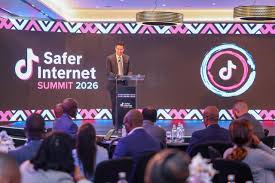

TikTok has announced an additional $200,000 investment in advertising credits to support Artificial Intelligence (AI) media literacy initiatives across Sub-Saharan Africa. The disclosure was made by Tokunbo Ibrahim, TikTok’s Head of Government Relations and Public Policy for Sub-Saharan Africa, during the company’s third annual Sub-Saharan Africa Safer Internet Summit held in Nairobi, Kenya. This new funding is specifically earmarked for local organizations working to expand public understanding of AI technologies and their implications for digital safety.
The investment builds upon the company’s broader $2 million AI Literacy Fund, which was established in November 2025. By providing ad credits, TikTok enables non-profit organizations and educational entities to reach a wider audience on the platform, facilitating the dissemination of content that teaches users how to distinguish between human-led and AI-generated media. Ibrahim noted that as AI technology advances rapidly, the platform remains committed to ensuring that both creators and viewers in the African region are empowered to engage with these tools responsibly.
The summit in Nairobi served as a forum for policymakers, safety experts, and digital advocates to discuss the protection of young people online and the development of policy frameworks for responsible AI governance. Central to these discussions was the challenge of “information disorder,” including the rise of deepfakes and AI-generated misinformation. To combat these issues, TikTok has identified and funded several key regional partners who are already implementing digital literacy programs.
Among the beneficiaries is Africa Check, which is currently expanding its fact-checking operations across Nigeria, South Africa, and Kenya. Their work focuses on helping audiences identify manipulated media and AI-generated disinformation. Similarly, the Centre for Journalism Innovation and Development (CJID) is utilizing support through its independent platform, DUBAWA, to strengthen the media’s capacity to verify digital content. In Kenya, the organization Mtoto News is producing specialized educational material designed to help younger demographics understand the mechanics of AI and the importance of ethical engagement with emerging technologies.
Valiant Richey, TikTok’s Global Head of Partnerships, Elections, and Market Integrity, emphasized that the efficacy of these programs relies on local expertise. He stated that partnering with organizations that have deep communal roots ensures that AI literacy efforts are culturally relevant and impactful. Beyond external partnerships, Richey highlighted TikTok’s internal transparency mechanisms, which include requirements for creators to label realistic AI-generated content. The platform also employs invisible watermarking and content credentials, aligning with the standards set by the Coalition for Content Provenance and Authenticity (C2PA).
The scale of digital activity in Sub-Saharan Africa presents significant moderation challenges. TikTok reports that more than 100 million pieces of content are uploaded to the platform globally every day. To manage this volume, the company relies heavily on a multi-layered approach that combines human moderation with advanced automated detection technology. In the third quarter of 2025 alone, TikTok removed more than 14 million videos across Sub-Saharan Africa for violations of community guidelines. Data indicates that 96.7 per cent of this content was identified and removed proactively by automated systems before users encountered it.
The push for AI literacy is particularly relevant as African nations begin to draft national AI strategies. Countries like Nigeria and Kenya have recently made strides in formulating frameworks to balance innovation with safety. TikTok’s investment in media literacy supports these governmental efforts by fostering a more informed user base. The company maintains that while AI enhances creativity and improves automated moderation, the human element both in terms of moderation teams and an educated public remains indispensable for maintaining a secure digital ecosystem.
As the program progresses, the $200,000 in ad credits will be monitored to evaluate its reach and effectiveness in reducing the impact of misinformation. By focusing on the intersection of technology and education, the initiative seeks to ensure that the digital transition in Sub-Saharan Africa is characterized by transparency and user protection. The commitment reflects a growing trend among global tech firms to localize their safety interventions in response to the unique socio-political landscapes of African markets.