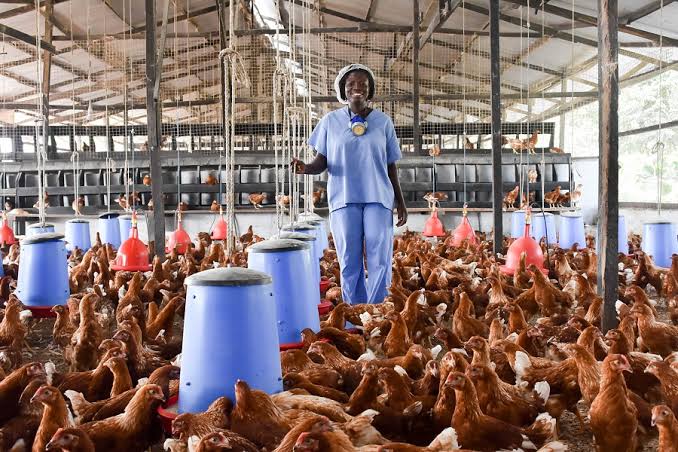

British American Tobacco’s (BAT) partnership with the Edo State Government to boost poultry production represents a notable intersection of corporate diversification strategy and subnational economic development planning. The collaboration, which will leverage BAT’s agricultural extension expertise and infrastructure to support poultry farmers across the state, offers a template for how private sector capabilities developed in one agricultural subsector can be repurposed to address broader food security and employment objectives. For Edo State, the initiative arrives at a moment when Governor Godwin Obaseki’s administration is seeking to consolidate its agricultural transformation agenda and demonstrate that the state can attract investment beyond the traditional oil and gas sectors.
The economic logic underpinning the partnership merits careful examination. BAT Nigeria, like its global parent, has long maintained extensive agricultural programmes focused on tobacco contract farming, providing inputs, training, and guaranteed offtake to thousands of farmers across Oyo, Ondo, Osun, and Kebbi states. This infrastructure—including extension workers, input supply chains, and quality control systems—represents a sunk investment that can be applied to additional crops at relatively low marginal cost. By extending these capabilities to poultry farmers, BAT effectively monetises its agricultural platform while diversifying its stakeholder engagement portfolio in a regulatory environment increasingly hostile to tobacco consumption.
For Edo State, the partnership addresses multiple policy objectives simultaneously. Poultry production in Nigeria faces persistent challenges: disease outbreaks, high feed costs, fragmented markets, and limited access to veterinary services. BAT’s structured approach—contract farming with clear quality specifications and offtake guarantees—could introduce the discipline and predictability that smallholder poultry operations have historically lacked. If successful, the model could increase domestic chicken and egg production, reducing Nigeria’s reliance on frozen poultry imports that have long strained foreign exchange reserves and attracted smuggling.
The fiscal implications extend to state government revenues and household incomes. Edo State’s internally generated revenue (IGR) has grown significantly under the Obaseki administration, driven by administrative reforms and digitalisation of collections. However, sustainable IGR growth ultimately depends on expanding the formal economic base. Agricultural value chains that integrate smallholders with structured markets create taxable activities at multiple points—input supply, production, processing, and distribution—while generating employment that broadens the income tax base. Every poultry farmer whose productivity increases through this partnership represents potential incremental economic activity that feeds into state finances.
From a national food security perspective, the initiative aligns with the Federal Government’s Agricultural Promotion Policy and the “Renewed Hope” agenda’s emphasis on reducing food imports. Nigeria spends billions of dollars annually on food imports, much of it on poultry products that could theoretically be produced domestically. The constraints are structural, not natural: disease control, feed costs, and market coordination. BAT’s intervention, if scaled, could demonstrate that private capital and management expertise can address these coordination failures more effectively than government programmes alone.
The investment climate signal is equally significant. Edo State has positioned itself as a relatively business-friendly destination, with investments in infrastructure, land administration reform, and ease of doing business initiatives. The BAT partnership reinforces this narrative by showing that multinational corporations see value in engaging with the state government beyond simple regulatory compliance. For other investors considering agricultural or manufacturing projects in Nigeria, the existence of a functional state-level partnership model reduces perceived risk and provides a template for engagement.
However, the partnership also raises questions about appropriate roles for tobacco companies in agricultural development. Public health advocates have long criticised BAT and other tobacco firms for corporate social responsibility initiatives that potentially launder reputations while core business activities continue to cause harm. The poultry partnership, whatever its developmental merits, must be evaluated within this context. Edo State authorities will need to ensure that the collaboration’s benefits are transparent, independently monitored, and not contingent on favourable treatment of BAT’s tobacco operations.
For farmers, the practical test will be whether the partnership delivers tangible improvements in productivity and income. Contract farming arrangements can sometimes create dependency relationships where farmers bear production risks while buyers capture most value. The specific terms—pricing mechanisms, quality standards, input costs, and dispute resolution procedures—will determine whether poultry producers emerge as genuine partners or peripheral suppliers. State government oversight of these contractual details will be essential to ensuring developmental outcomes.
The broader lesson for Nigeria’s agricultural transformation is the importance of leveraging existing private sector infrastructure rather than building parallel public systems. BAT’s agricultural extension network, developed over decades for tobacco, now becomes an asset for poultry development at minimal additional cost to the state. Similar opportunities likely exist with other agribusiness firms operating in Nigeria—flour millers, breweries, oil palm plantations—whose supply chain infrastructure could support smallholder development in complementary crops. Policy frameworks that incentivise such cross-sectoral leverage could accelerate agricultural transformation without requiring prohibitive public investment.