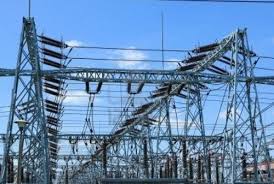

The Rural Electrification Agency (REA) has launched a new wave of mini-grid deployments specifically engineered to bypass the systemic flaws that have historically weakened Nigeria’s national grid. According to the Managing Director of the REA, Dr. Abba Aliyu, the agency is now prioritizing the installation of completely independent electricity systems within isolated communities. By decentralizing power generation and moving away from the traditional centralized model, the REA aims to insulate local economies from the cascading failures and total system collapses frequently seen on the main grid.
The structural and technological consequence of these new installations involves a comprehensive infrastructure overhaul at the community level. Dr. Aliyu explained that every mini-grid now includes its own dedicated distribution network and 100% metering to ensure financial sustainability and transparency. To further modernize oversight, the agency has integrated SCADA (Supervisory Control and Data Acquisition) systems into its projects, allowing engineers to monitor the real-time performance of any mini-grid directly via mobile devices, regardless of its remote location.
Analytically, the REA is adopting a hybrid “Interconnected Mini-Grid” strategy for peri-urban areas where existing distribution networks remain unreliable. Through Service-Level Agreements (SLAs) with Distribution Companies (DISCOs), the REA provides solar-generated power during the day, while DISCOs are expected to supply the night-time load. In instances where the DISCO fails to deliver, the REA’s advanced battery storage systems are designed to kick in automatically, ensuring a seamless supply of electricity that is no longer dependent on a single point of failure.
The impact on “National Grid Stability and Capacity” represents a vital dimension of the agency’s 2026 roadmap. The REA is currently deploying 50 interconnected mini-grids intended to inject 280 megawatts of reliable, renewable energy into the broader energy architecture. This move is designed to stabilize the supply in high-demand areas while reducing the overall pressure on the national transmission infrastructure, which has struggled with maintenance and load-shedding issues throughout the year.
Furthermore, the integration of redundant storage systems and digital oversight serves as a direct response to the “lessons learned” from decades of national grid instability. By combining localized generation with smart-grid technology, the REA is attempting to build a resilient energy ecosystem that can function autonomously. This shift toward a distributed energy resource (DER) model is expected to provide a blueprint for how Nigeria can achieve its rural electrification goals while bypassing the bottlenecks of its legacy power stations.
The long-term outlook for the REA’s projects suggests a fundamental transformation in how electricity is delivered to the “last mile” of the Nigerian population. As the 280-megawatt injection comes online, the agency expects to see a significant boost in local industrial productivity and a decrease in the reliance on expensive, carbon-heavy petrol generators. For the isolated and peri-urban communities involved, these mini-grids represent a leapfrogging of traditional utility models toward a more stable, solar-powered future.