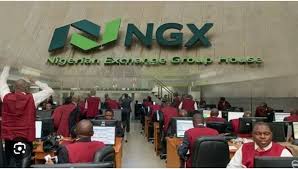

The Nigerian Exchange (NGX) concluded the first week of March 2026 with a resilient performance, as market capitalisation appreciated to N126.437 trillion. This growth occurred despite a 10.7% week-on-week decline in total transaction value, which settled at N177.687 billion. Investors traded 3.695 billion shares across 370,980 deals, a volume reduction from the previous week’s 5.494 billion shares. This shift in the “liquidity of opportunity” serves as a vital indicator of market recalibration as the 2026 fiscal cycle progresses.
The Financial Services Industry maintained its role as the primary “infrastructure of distribution” for market activity, contributing 66.14% of the total volume. In this sector, investors moved 2.444 billion shares valued at N72.029 billion. The Oil and Gas and Services industries followed as secondary drivers of market turnover. Specifically, heavy trading in Jaiz Bank Plc, Fortis Global Insurance Plc, and Access Holdings Plc accounted for nearly 18% of the total equity volume, reflecting a concentrated “security of the mandate” among top-tier stocks.
While total turnover value dipped, the NGX All-Share Index climbed by 2.15% to close at 196,968.15 points. Most sector indices mirrored this upward trend, though the Insurance and Consumer Goods sectors faced “fiscal friction” and closed lower. Notably, the Growth index experienced a sharp 15.31% depreciation. Market breadth showed signs of “operational realism,” with 44 equities appreciating in price compared to 58 decliners, a slight improvement in the gain-loss ratio from the preceding week.
Top gainers for the week included the Nigerian Exchange Group and Eterna, while companies like Mecure and Multiverse Mining featured among the top losers. The Exchange also implemented key capital adjustments to enhance the “verifiability of results” for listed entities. This included the listing of 105 million additional shares for Fidson Healthcare Plc under its Employee Share Scheme. This expansion brought Fidson’s total issued shares to 2.4 billion, strengthening its “human capital” incentives and market presence.
Additionally, the real estate sector received a boost with the listing of 68.158 million units of the Chapel Hill Denham Nigeria Real Estate Investment Trust (REIT). These units, priced at N103 each, were listed under a N400 billion issuance programme. Such listings are a prerequisite for deepening the “liquidity of opportunity” in Nigeria’s property investment landscape. Ultimately, the week’s activity underscores the “stability of the policy” framework and the continued “social contract” between the Exchange and its diversifying investor base.