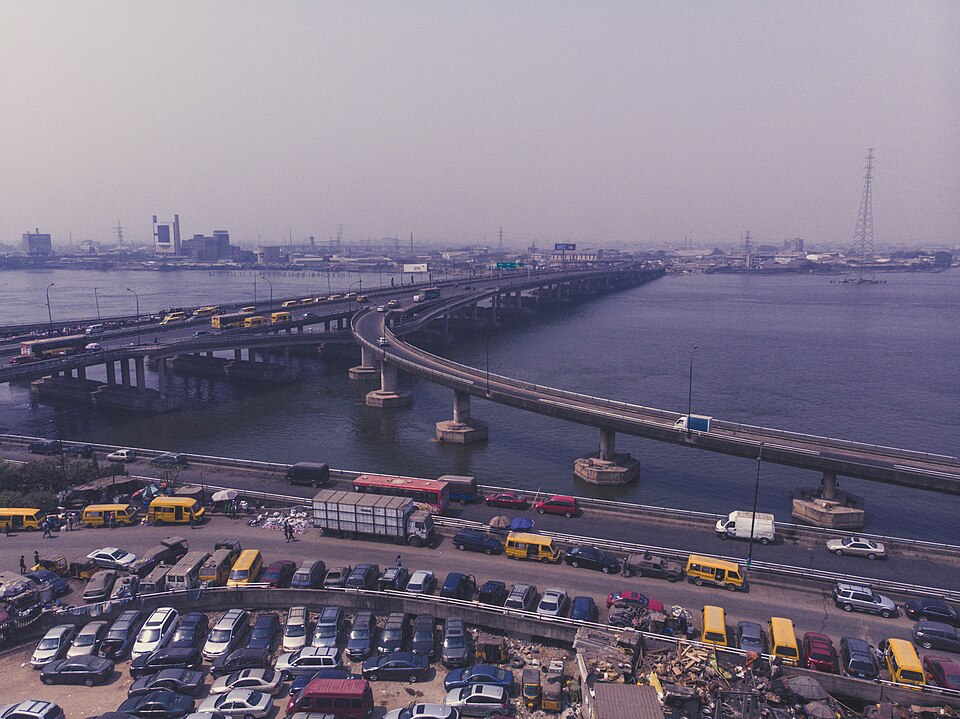

The Federal Executive Council’s approval for the demolition and comprehensive rebuilding of Lagos’s Carter Bridge represents a significant capital allocation decision with implications extending far beyond transportation infrastructure. The 124-year-old bridge, one of three critical connections between Lagos Island and the mainland, has long symbolized both the colonial-era origins of Nigeria’s economic capital and the accumulating maintenance deficit that characterizes much of the nation’s core infrastructure. By approving a complete rebuild rather than continued palliative repairs, the administration signals recognition that strategic urban assets require fundamental rehabilitation to support the productivity demands of Africa’s largest economy.
From an economic geography perspective, Carter Bridge’s functionality directly influences the efficiency of labor markets, goods movement, and service delivery across the Lagos metropolitan area. The bridge serves commercial traffic accessing Lagos Island’s banking and corporate districts, port-related logistics moving between Apapa and mainland warehouses, and the daily commute of hundreds of thousands of workers whose productivity depends on predictable travel times. Degraded infrastructure imposes what economists term “congestion taxes”—hidden costs absorbed by businesses through delayed deliveries, by workers through lost hours, and by the environment through increased emissions from idling vehicles. The rebuild, properly executed, offers the opportunity to eliminate these inefficiencies and enhance the competitiveness of Lagos-based enterprises.
The fiscal calculus underlying the approval warrants careful examination. Infrastructure maintenance deferral, while politically convenient in the short term, typically results in exponentially higher rehabilitation costs when assets reach critical failure points. Carter Bridge’s age and condition suggest that Nigeria has arrived at that juncture, where continued patchwork repairs would constitute throwing good money after bad without addressing underlying structural deficiencies. The FEC’s decision to authorize comprehensive replacement, while carrying significant upfront capital costs, may prove fiscally prudent over the asset’s lifecycle if procurement and execution adhere to international quality standards.
For the investment climate, major infrastructure projects function as signals of government capacity and commitment. International portfolio investors and multilateral development partners scrutinize project preparation quality, procurement transparency, and execution capability as indicators of broader governance effectiveness. The Carter Bridge rebuild, if delivered on time and within budget, would strengthen confidence in Nigeria’s ability to deploy capital productively—a necessary condition for attracting the infrastructure financing the country requires across multiple sectors. Conversely, delays, cost overruns, or quality failures would reinforce negative narratives about implementation capacity that have historically constrained investment.
The Lagos State dimension adds complexity to the federal approval. While Carter Bridge falls under federal infrastructure jurisdiction as part of the national road network, its daily users are predominantly Lagos residents and businesses whose economic activities generate the VAT and company income tax revenues that fund federal budgets. This interdependence argues for enhanced coordination between federal and state authorities during the demolition and reconstruction phases, including traffic management planning, alternative route provision, and potential cost-sharing arrangements. The new VAT distribution formula, which directs 55 percent of consumption tax revenue to states, provides fiscal space for Lagos to contribute meaningfully to such coordination.
The demolition and rebuild also raise important questions about construction sector capacity and local content integration. A project of this scale will require significant quantities of cement, steel, and construction aggregates—all sectors where Nigerian producers have expanded capacity in recent years. Procurement structuring that enables local manufacturers to supply materials, while maintaining quality standards and cost competitiveness, would maximize the project’s domestic economic multiplier effects. Similarly, employment generation during the construction phase could provide skills development opportunities for Lagos’s youth population, aligning with the “Renewed Hope” agenda’s emphasis on job creation.
Transport economists will also monitor whether the rebuild incorporates modern design features that extend asset life and enhance functionality. Carter Bridge’s original design reflected early 20th-century traffic volumes and vehicle weights. A 21st-century replacement should accommodate projected freight growth, integrate intelligent transportation systems for traffic management, and include pedestrian and cycling infrastructure that supports multimodal mobility. These features, while adding to upfront costs, deliver lifecycle value through reduced maintenance requirements and enhanced user safety.
For businesses operating in Lagos Island’s commercial core, the reconstruction timeline represents both challenge and opportunity. Disruption during demolition and construction is inevitable, potentially affecting customer access, employee commutes, and supply chain logistics. However, proactive communication from contractors and transport authorities, combined with investment in alternative routing and temporary transport solutions, can mitigate these impacts. Companies that adapt their logistics and work arrangements during the disruption period may emerge with more resilient operational practices.
The broader lesson for Nigeria’s infrastructure governance is the importance of asset management systems that predict and prevent critical failures rather than reacting to them. Carter Bridge’s age made its eventual replacement foreseeable decades ago, yet no dedicated sinking fund or phased rehabilitation plan appears to have accumulated resources for this purpose. Establishing infrastructure renewal funds, ring-fenced from recurrent budget pressures and financed through user charges or dedicated taxes, would enable future administrations to address similar challenges without competing for discretionary capital budgets.