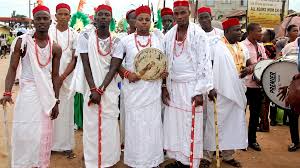

In a significant shift in the regional push for state creation, the Ika Igbo-speaking communities of Edo State have formally declared their unwavering support for the establishment of Anioma State. During a high-level stakeholders’ gathering held in Igbanke on Monday, March 2, 2026, leaders and elders from these indigenous settlements demanded that the proposed state be zoned to Nigeria’s South-East geopolitical zone and, crucially, that their communities be extracted from Edo State to be included in the new territory.
The structural and political consequence of this declaration is rooted in what the communities describe as decades of “political stranding” and administrative neglect. Led by Apostle Azuka Okah under the aegis of The Voice of the Indigenous Ika Igbo Initiative, settlements including Igbanke, Iru, Ekpon, Igbo-Giri, and Owa Ri Uzo argued that their current placement within Edo State is an artificial colonial construct. They maintain that this arrangement has suppressed their cultural identity and resulted in a near-total absence of basic infrastructure, such as potable water, healthcare, and funded schools, despite their contributions to the state’s economy.
Analytically, the demand represents a quest for “cultural and developmental alignment.” The Ika Igbo people of Edo share a linguistic, historical, and traditional affinity with the Anioma people of Delta North. By seeking to join a South-East Anioma State, these communities aim to bridge a geographical divide that has historically excluded them from decision-making processes. They contend that being part of a state tailored to their specific ethnic and cultural realities would transition development from an “afterthought” to a core priority of governance.
The impact on “National Unity and Geopolitical Balance” is a vital dimension of this advocacy. The stakeholders asserted that recognizing Anioma as a South-East state would address historical injustices and promote fairness within the Nigerian federation. They specifically lauded Senator Ned Nwoko for his persistent legislative push at the National Assembly, describing his vision for Anioma State as a timely vehicle for restoring the dignity and self-worth of Ika Igbo populations scattered across both Delta and Edo States.
Furthermore, the leadership of the initiative has called for a disciplined and peaceful approach to this agitation. Apostle Okah urged the youth to avoid violence and instead channel their frustrations into “constructive dialogue and lawful engagement” with the Federal Government and the National Assembly. This strategic emphasis on peaceful advocacy is intended to demonstrate that the quest for Anioma State is a legitimate pursuit of equity rather than a source of regional instability.
The long-term outlook for the Anioma State project now hinges on the National Assembly’s willingness to redraw interstate boundaries. If successful, the inclusion of Edo’s Ika Igbo communities would represent one of the most significant territorial realignments in Nigeria’s modern history. For these “administratively neglected” populations, the creation of Anioma State is viewed not merely as a change in map coordinates, but as a final return to their ancestral and political home.