
Wednesday, June 24, 2026
  • Login
No Result
View All Result
The Business Times
  • News
  • BT Exclusive
  • Economy
  • Business
  • Financial Markets
  • Politics
  • Energy
  • Insights
  • Sports
  • News
  • BT Exclusive
  • Economy
  • Business
  • Financial Markets
  • Politics
  • Energy
  • Insights
  • Sports
No Result
View All Result
The Business Times
No Result
View All Result
Home Economy

OPEC+ Adds 206,000 bpd From April Despite Escalating Middle East Supply Threats

byDorcas Ojeolowobaye
March 14, 2026
in Economy, Global News
0
OPEC+ Adds 206,000 bpd From April Despite Escalating Middle East Supply Threats
12
VIEWS
Share on FacebookShare on Twitter

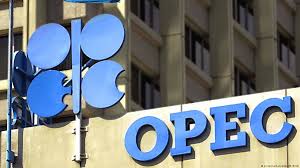
OPEC+ on Sunday agreed to raise crude oil production to 206 000 barrels per day (bpd)  based on recent economic news (March 2026), this figure refers specifically to an increase in oil production agreed upon by OPEC+ to manage supply amidst geopolitical tensions from April, pressing ahead with a cautious supply increase even as the Middle East conflict involving the United States, Israel and Iran drives fresh uncertainty across energy markets.

The decision followed a meeting of eight “core” OPEC+ members Saudi Arabia, Russia, the United Arab Emirates, Kazakhstan, Kuwait, Iraq, Algeria and Oman which have carried the bulk of the alliance’s voluntary output adjustments in recent years. OPEC+ said the increase represents less than 0.2% of global oil supply, underscoring what analysts describe as a calibrated move to avoid over-tightening the market while monitoring demand and geopolitical risk.

Oil traders have been focused on the Strait of Hormuz, the strategic chokepoint between Iran and Oman through which around one-fifth of global oil flows typically pass. In the past 48 hours, shipping data and company actions signalled rising disruption: multiple tankers anchored outside the strait, while major Japanese shipping firms directed vessels to halt passage or remain in safer waters following U.S.-Israeli strikes on Iran.

Market anxiety has also been amplified by conflicting signals about navigation safety. A report was published that Tehran said navigation was closed and tanker movements slowed markedly, while a U.S. Navy-linked maritime information centre said there was no official international suspension even as risks surged, including heavier naval activity, congestion at anchorages and higher insurance costs.

The modest April increase also fits into a broader OPEC+ roadmap. The eight producers have been gradually unwinding a tranche of voluntary cuts introduced in 2023, after previously lifting quotas through late 2025 and pausing further increases during early 2026 on seasonal demand weakness, according to reports.

Citing sources familiar with the Sunday meeting as saying OPEC+ debated a range of potential hikes before settling on 206,000 bpd, reflecting the alliance’s balancing act: keeping a lid on inflationary price spikes while avoiding a supply shock if the Hormuz situation worsens.

Tags: Brent Crudeglobal energy marketsMiddle East conflictOil ProductionSaudi Arabiashipping disruptionStrait of Hormuz
Dorcas Ojeolowobaye

Dorcas Ojeolowobaye

Next Post
Cashless Toll Policy Triggers Gridlock at Lagos, Abuja Airports

Cashless Toll Policy Triggers Gridlock at Lagos, Abuja Airports

Leave a Reply Cancel reply

Your email address will not be published. Required fields are marked *

Recommended

LIRS Chief Credits Tinubu’s Reforms for Lagos Revenue Growth

LIRS Chief Credits Tinubu’s Reforms for Lagos Revenue Growth

2 months ago
Industrial Court Fines Kano Government Over Vehicle Dispute

Industrial Court Fines Kano Government Over Vehicle Dispute

4 months ago

Popular News

  • PTML Plans $50 Million Investment to Expand Lagos Port Operations

    0 shares
    Share 0 Tweet 0
  • Nigeria Needs $100 Billion Annually to Close $2.3 Trillion Infrastructure Gap

    0 shares
    Share 0 Tweet 0
  • WeLight raises €27m for Nigeria, DRC mini-grid expansion

    0 shares
    Share 0 Tweet 0
  • Nigeria Bank Auditors Urged to Upgrade Skills as AI Changes How Banks Work

    0 shares
    Share 0 Tweet 0
  • Government Borrowing Climbs N17.39 Trillion as Fiscal Pressures Test Monetary Tightening Efforts

    0 shares
    Share 0 Tweet 0

Connect with us

Facebook Twitter Instagram TikTok

Newsletter

Pages

  • About Page
  • Contact
  • Domestic Gas Sales Rise 30% as Nigeria’s Energy Reforms Gain Traction
  • Privacy Policy
  • Terms & Conditions

Navigation

  • News
  • BT Exclusive
  • Economy
  • Business
  • Financial Markets
  • Politics
  • Energy
  • Insights
  • Sports

© 2025 The Business Times NG .

Welcome Back!

OR

Login to your account below

Forgotten Password?

Retrieve your password

Please enter your username or email address to reset your password.

Log In
No Result
View All Result
  • Home
  • News
  • BT Exclusive
  • Economy
  • Business
  • Financial Markets
  • Politics
  • Energy
  • Insights
  • Sports

© 2025 The Business Times NG .