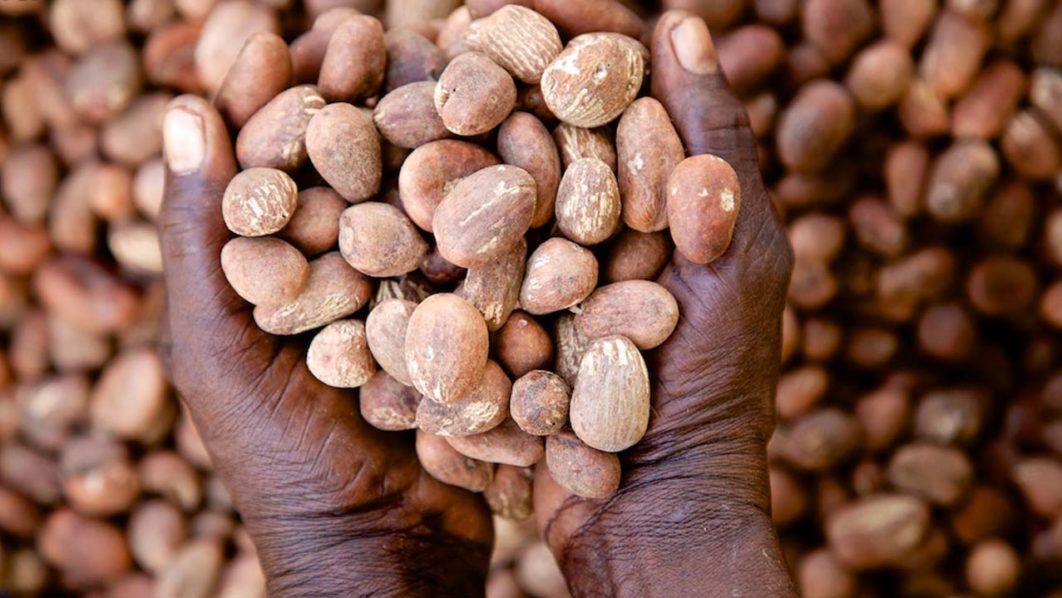

President Bola Tinubu has approved a one-year extension of the ban on raw shea nut exports, prolonging the restriction from 26 February 2026 to 25 February 2027 in a move designed to force domestic processing and capture greater value from one of Nigeria’s strategic agricultural commodities. The decision, announced hours before the initial six-month ban was due to expire, aligns with the administration’s industrialisation drive under the Renewed Hope Agenda and signals a more assertive approach to agricultural policy after decades of raw commodity exports.
According to presidential spokesman Bayo Onanuga, the policy is explicitly designed to boost local processing capacity, deepen value addition, and improve livelihoods in shea-producing communities. The logic is straightforward: raw shea nuts command a fraction of the price of processed shea butter, and by compelling domestic processing, Nigeria aims to capture processing margins, create industrial employment, and develop export capacity in higher-value segments. The extension provides a longer policy horizon for investors considering processing facilities, addressing a common complaint that short-term bans create uncertainty rather than enabling long-term investment.
Tinubu also authorised the Federal Ministry of Industry, Trade and Investment and the Presidential Food Security Coordination Unit to implement a unified national framework for the shea value chain. This institutional coordination responds to a persistent challenge in Nigerian agricultural policy: fragmented oversight across multiple agencies and ministries that dilutes implementation effectiveness. A unified framework, if properly executed, could streamline regulation, coordinate support services, and provide consistent messaging to investors and farmers.
The president approved the adoption of an export framework developed by the Nigerian Commodity Exchange (NCX) and ordered the withdrawal of all waivers permitting direct raw exports, directing that any surplus be channelled exclusively through the NCX system. This centralisation through the NCX represents a significant shift in how agricultural exports are managed. By funnelling surplus through a single exchange, the government gains visibility into volumes, pricing, and destination markets that is currently fragmented across numerous informal channels.
The economic stakes are substantial. Nigeria is among the world’s largest producers of shea nuts, with the crop growing wild across a vast belt stretching from Kwara to Adamawa states. The shea value chain supports millions of rural women who collect and process the nuts using traditional methods. However, the vast majority of production has historically been exported raw, with processing margins captured in Europe and Asia where shea butter is used extensively in cosmetics, confectionery, and pharmaceuticals.
Previous attempts to restrict raw exports have encountered implementation challenges. Smuggling across porous borders remains difficult to control, and inadequate domestic processing capacity can lead to spoilage when harvests exceed local processing capability. The extension provides a longer adjustment period, but the fundamental challenge remains: building processing capacity takes time, capital, and technical expertise, while smuggling responds quickly to price differentials.
The NCX framework will need to demonstrate that it can provide transparent pricing, reliable payment, and efficient logistics to compete with established informal trading networks. Farmers and traders accustomed to cash transactions with minimal bureaucracy may resist channeling surplus through a formal exchange system unless clear benefits are demonstrated. The withdrawal of all waivers granting exceptions to the ban is intended to eliminate loopholes that have undermined previous restrictions, but enforcement across Nigeria’s extensive northern borders will require significant resources.
For investors considering shea processing facilities, the extended ban provides a more predictable policy environment. A one-year horizon remains relatively short for major capital investments, but the signal of policy continuity may encourage expansions by existing processors and new entries by firms confident that the export restriction represents a lasting shift rather than a temporary experiment. The unified national framework could further reduce uncertainty by clarifying standards, support mechanisms, and regulatory requirements.
The shea sector also intersects with broader development objectives around gender inclusion and rural livelihoods. Women dominate shea collection and primary processing, and policies that increase the value captured locally have potential to improve household incomes and women’s economic autonomy. However, ensuring that women benefit from value addition requires deliberate attention to their access to processing facilities, credit, and markets—outcomes that do not automatically follow from raw export restrictions.
The extension positions Nigeria alongside other West African producers seeking to capture greater value from agricultural commodities. Ghana, Côte d’Ivoire, and Burkina Faso have variously experimented with export restrictions on raw cashew, cocoa, and shea, with mixed results. Success depends on complementary investments in processing infrastructure, quality improvement, and market development that enable domestic processors to compete on quality and cost with established international buyers.
Tinubu’s directive also reflects a broader industrial policy orientation that extends beyond shea. The administration has signalled intent to move Nigerian exports up the value chain across multiple sectors, from agriculture to solid minerals. The shea ban extension serves as a test case for whether this vision can translate into effective implementation that balances the interests of farmers, processors, traders, and international buyers.
For Nigeria’s economy, the potential upside is significant. Developing a competitive shea processing industry could generate thousands of formal sector jobs, reduce rural poverty, diversify exports away from oil dependence, and position Nigeria as a supplier of high-value ingredients to global cosmetics and food industries. Realising this potential requires not only the ban but sustained investment in power, transport, and skills that enable domestic processors to operate competitively. The one-year extension provides time to begin this work, but the clock is ticking.